The Thistlethatch Cottage

May 29, 2022

The Thistlethatch Cottage was built in 1778 in the Mourne Mountains and, at 1000’, is the highest residence in County Down. The view, a spectacular view, is to the north, toward the Tellymore Forest and Newcastle on the coast. The road is called Fofanny (FO-fu-nee) and it means Land of the Thistles in Irish.

A copy of the 1927 Indenture by which the property was sold from Patrick Hugh Grant, who emigrated to 575 Van Duxen Street, in Stapleton Heights, Staten Island, New York, to his nephew Michael Joseph Grant of Fofannyreagh in County Down, sits on the kitchen table.
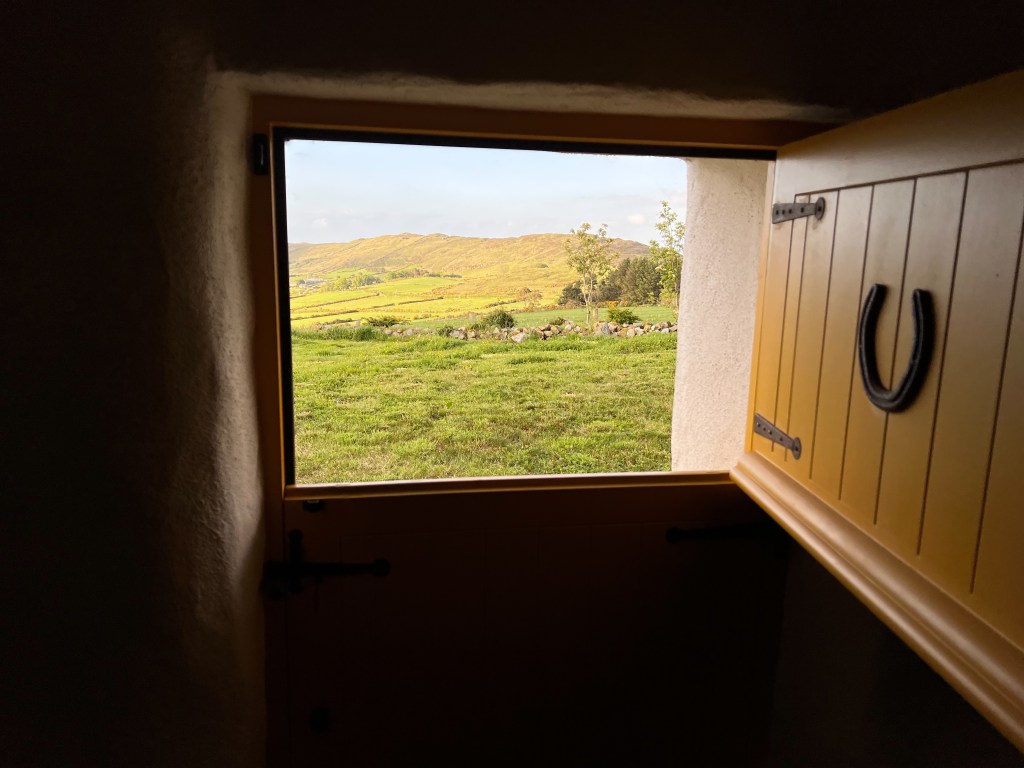
A gate spans the entrance and the owner Andy, who worked for two years to restore the house after the roof collapsed and it fell into dilapidation, asks that we mind that the gate be kept closed as the sheep in the area will wander in and are difficult to persuade to leave.  This fact is attested to by the sheep wool than hangs from the bottom of the wire fence across the road.

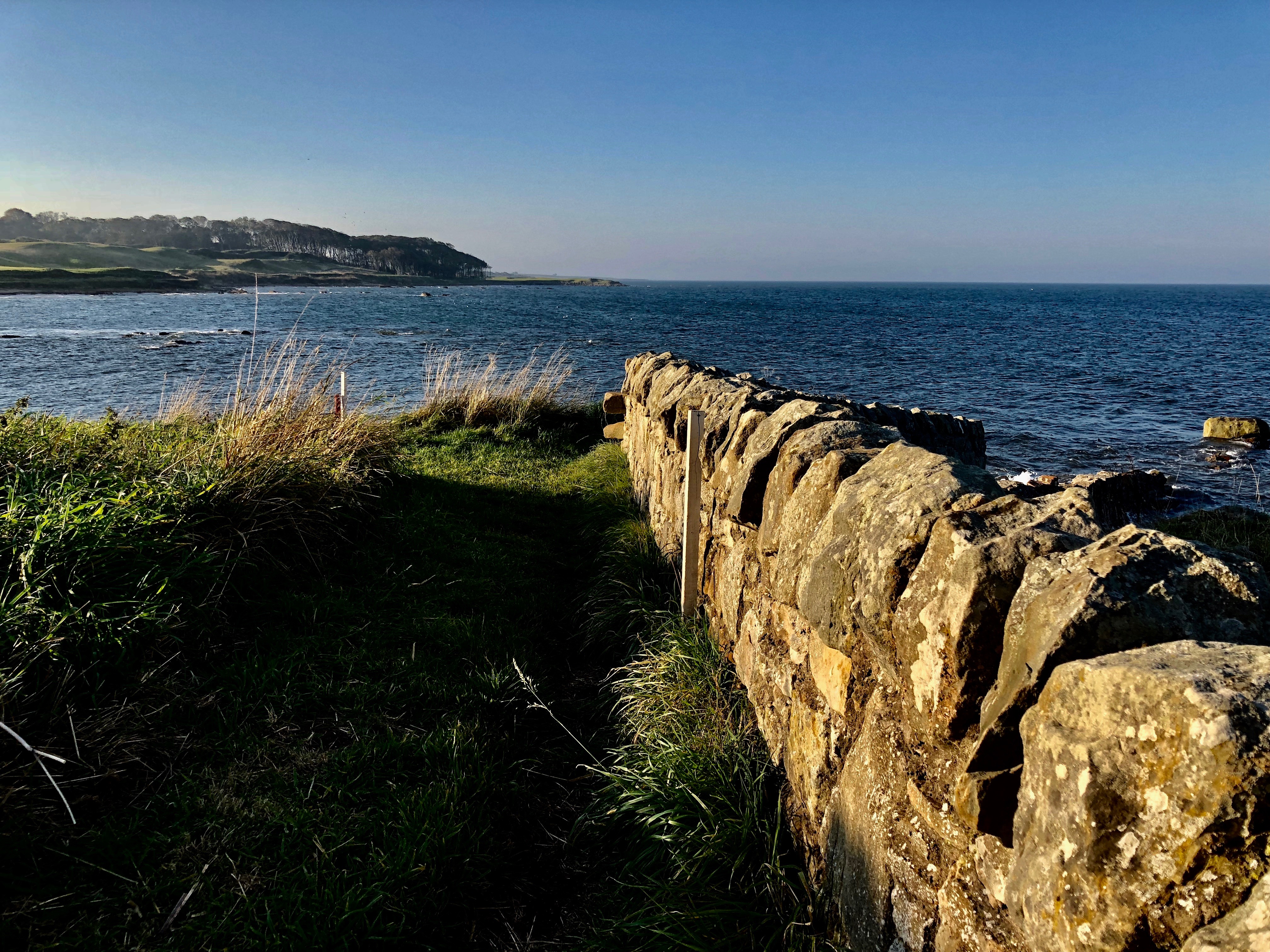
A rock wall borders the property. Wild yellow and white buttercups dot the lawn.  There is a swing suspended beneath a tall tree. Two Adirondack chairs sit in the lawn overlooking the valley.

The doorways are 5’8” tall, built at a time when the inhabitants were Cathy size. For Rob, the house is a bit of an obstacle course, ducking beneath short doorways while stepping down invisible steps on the gray slate floors. I take a header, waking Cathy in the middle of the night, on the very step Cathy reminded me to watch before we fell asleep.

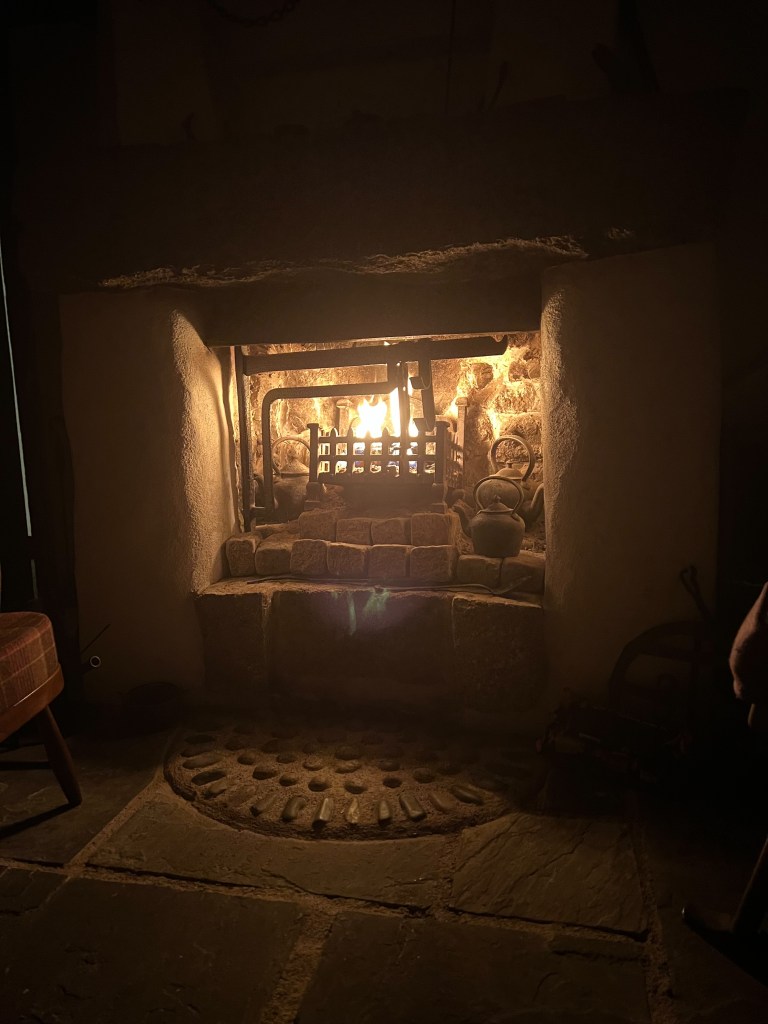
In the living room sits a rocking chair in front of a fire. On the mantle are hand tools from a bygone time. A note cautions you to remove the “sheep wooly” from the chimney before building a fire. It is kept there to prevent a draft.
In the kitchen is an old cast iron woodburning stove at which I restore my dignity and retrieve “hero status” after my nose dive from the night before when Cathy discovers I have old age skills (I can I build a mean fire and make a mean cup of coffee with an old French press ceramic pot) as well as new age skills (I can position my smart phone in my handy dandy mini-tripod and activate the shutter for a selfie from a distance with the handy dandy shutter release on my iWatch).
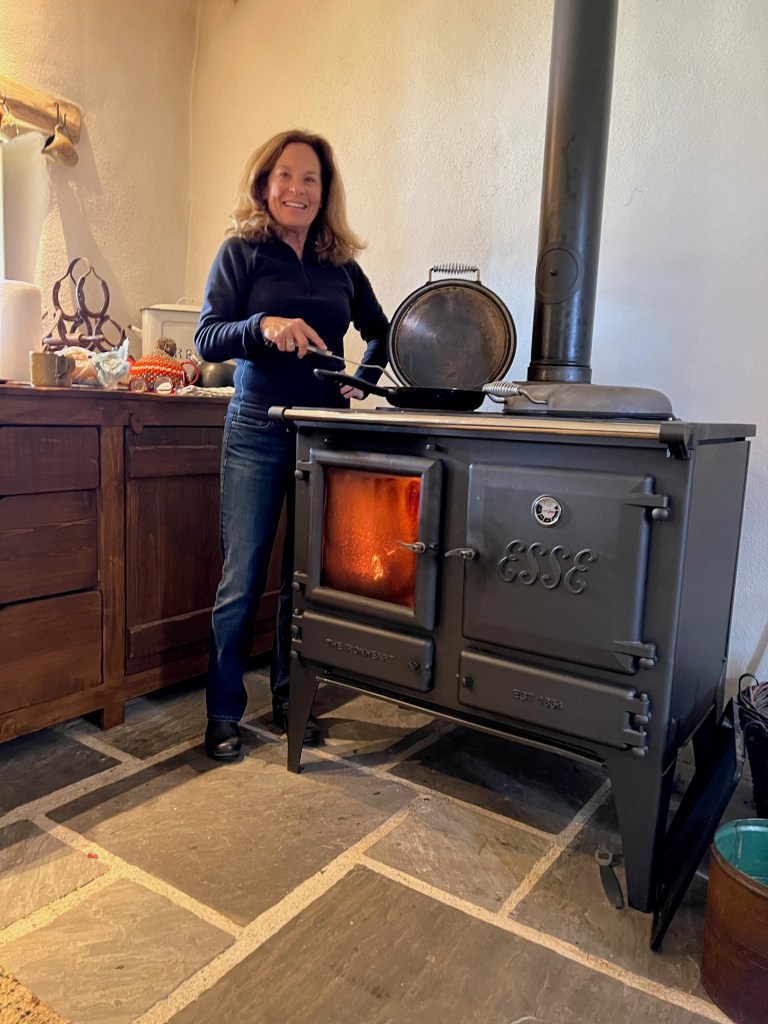
I brew Cathy her coffee and me my tea while she cooks the eggs and bacon on the stove. We walk to the yard to watch the valley below, Cathy bundled up in the robe we found folded at the foot of our bed.

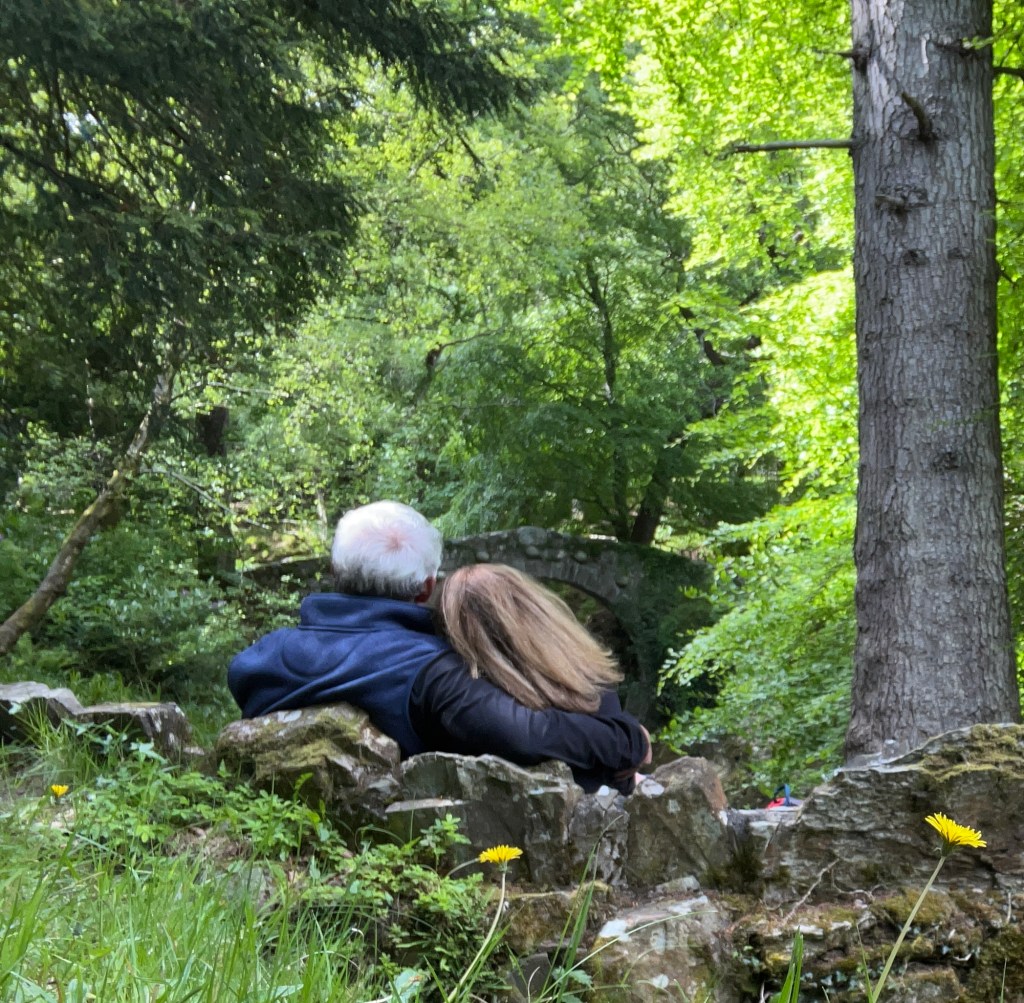
And at the end of the day, after we’ve found Rooneys and McKibbons and sat at the foot of the Foley Bridge in the Talleymore Forest (built in 1778, the exact same year as the Thistlethatch cottage . . . probably with the help of the stone mason who lived there), 

after we’ve shared salami and white Irish cheddar on surprisingly good French bread, and I’ve munched on too many shortbread cookies
Cathy runs a hot bath in the steel tub in the bedroom
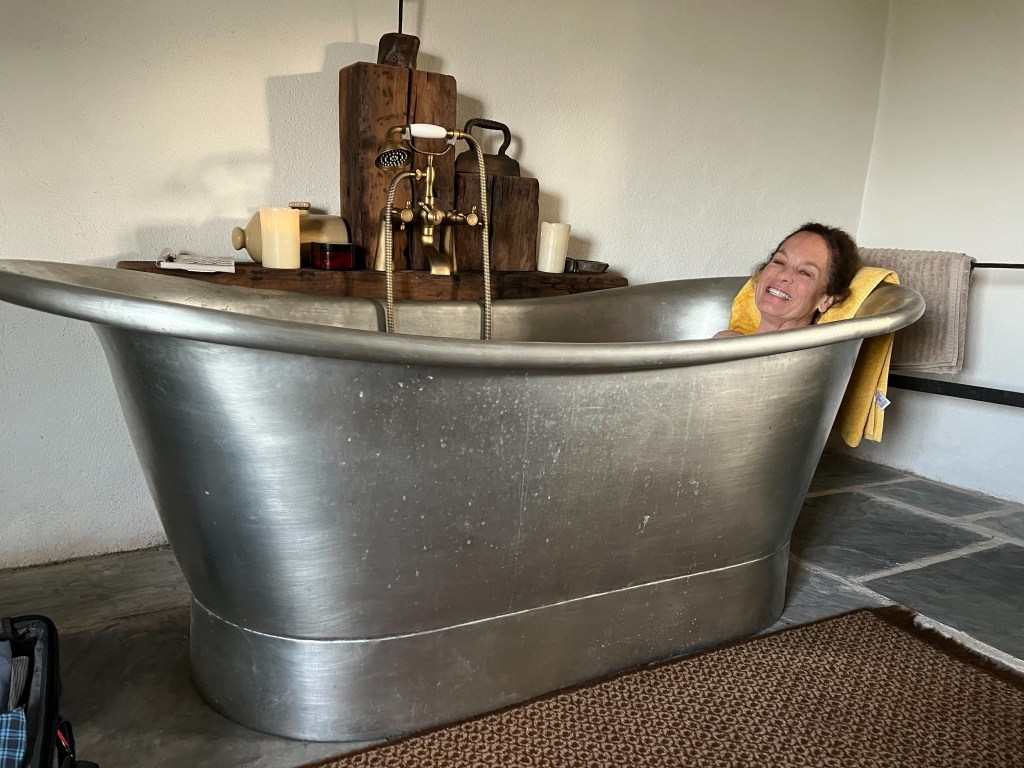
And I’m pretty sure it doesn’t get better than this. 

At least until tomorrow.

Meet the Flintstones

May 28, 2022

Flintstones. Meet the Flintstones.

They’re the modern stone age family.

From the town of Bedrock,

They’re a page right out of history.

         Fred and Wilma in a diesel Benz, that’s Cathy and me.

         Cathy was our pilot, cool, calm, focused on the center line, deftly adjusting her exterior mirrors slightly down so as to track how close to the edge of the road the Benz road,  darting in and out of roundabouts like Jackie Stewart in the chicane. 

Rob, the navigator? Not so much.

When he wasn’t jumping out of his seat, convinced that his side of the car was leaving the road when in fact it wasn’t, or when he wasn’t  searching for the right change, even the right currency, to pay the M1 toll, he was swearing at the Benz’wizzywig navsat guidance system and trying to find a damn volume button on the high tech  touchscreen—what happened to simple knobs?– so Cathy could hear the lady on Google Maps help them find a friggin cash machine.

         Let’s listen in, shall we:

Cathy:         Talk to me, Goose.

Rob:           Okay . . . there’s a roundabout coming up in .3 kilometers.

Cathy:         How long’s a kilometer.

Rob:           I think it’s like a mile. Want me to look it up?

Cathy:         (silence)

Rob:           If I leave Google Maps to use Google I may lose Google Maps.

Cathy:         (silence)

Rob:           Think of it as mileish……

Cathy:         (silence)

Rob:           Okay . . .this one’s a tricky one. We’re coming in at six o’clock; you’re going to be leaving at 12:00 . . . or is it 3:00? . . . no it’s 12:00 . . . no 3:00, it’s definitely 3:00

Cathy:         (silence) 

Rob:           So, you need to look over your right shoulder for cars from your right, then ease into the center lane of the circle to avoid the 9:00 which will take you to Dundalk  . . . we don’t want to go to Dundalk . . . then as we whiz by 12:00 you need to look over your left shoulder for traffic coming from Dunleer . . . we don’t want to go to Dunleer either . . . then ease back into the outside lane and leave at 3:00 heading for Blackrock

Cathy:         ( long silence)

Rob:           I wonder if that is where the expression “bad day at Blackrock came from?”

Cathy:         (longer silence)

Rob:           Want me to look it up?

You get the idea.

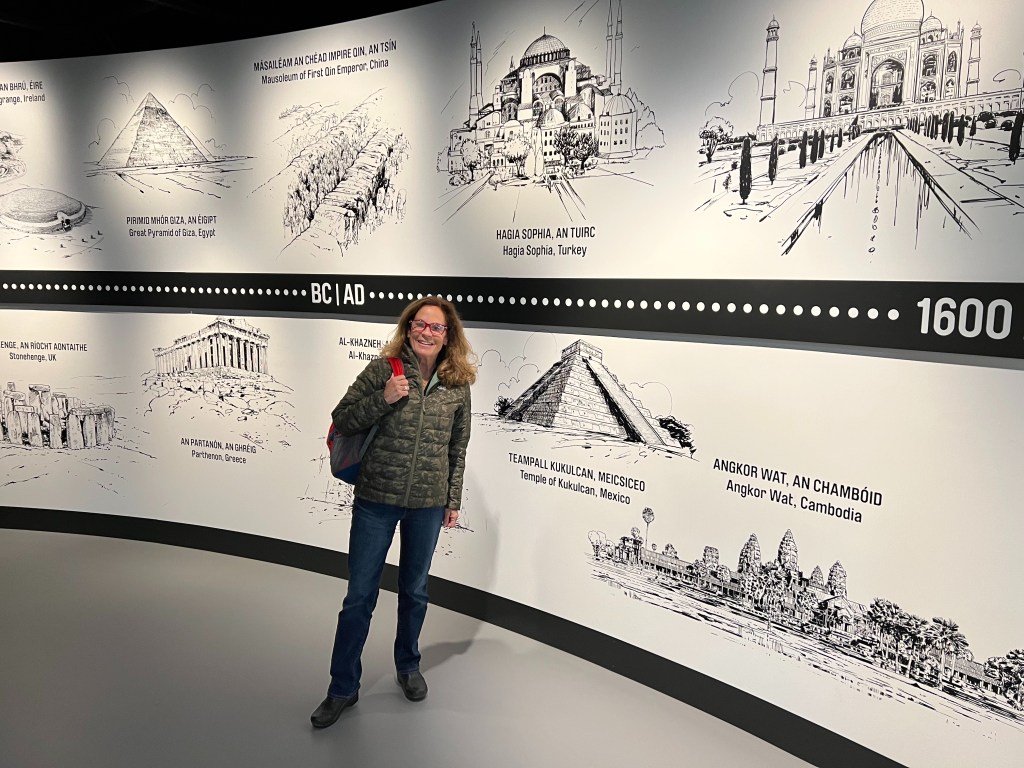
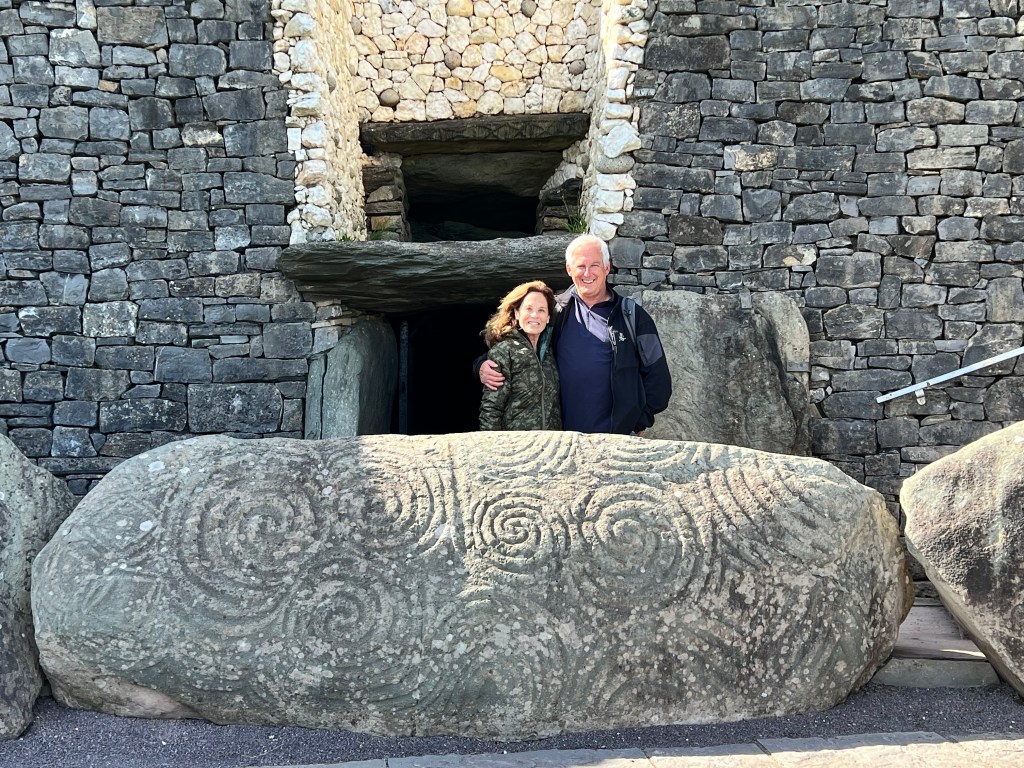
Newgrange is a magical place. I know this because a sharpy from Texas . . . you know the kind; the guy who asks questions to impress, not to illicit information . . .  this guy listened to our guide explain that some archeologists believe the spiral patterns in Neolithic art may have been aided by mind altering drugs or a belief in magic . . . and then asked “what was the magic?” 

Long silence.

Then the tour guide looked at him and calmly responded “if I told ye how tee magic worked, it wouldn’t be magic, now would it.”

         I decided not to ask questions.

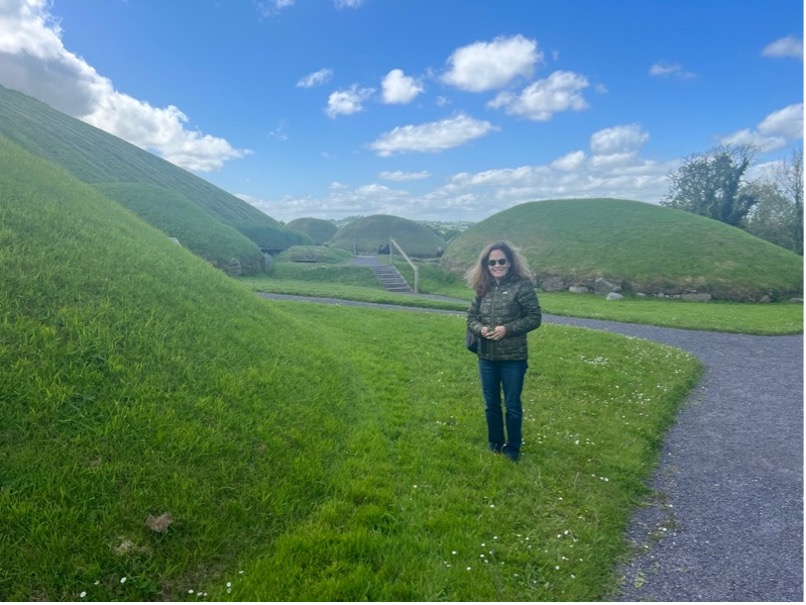
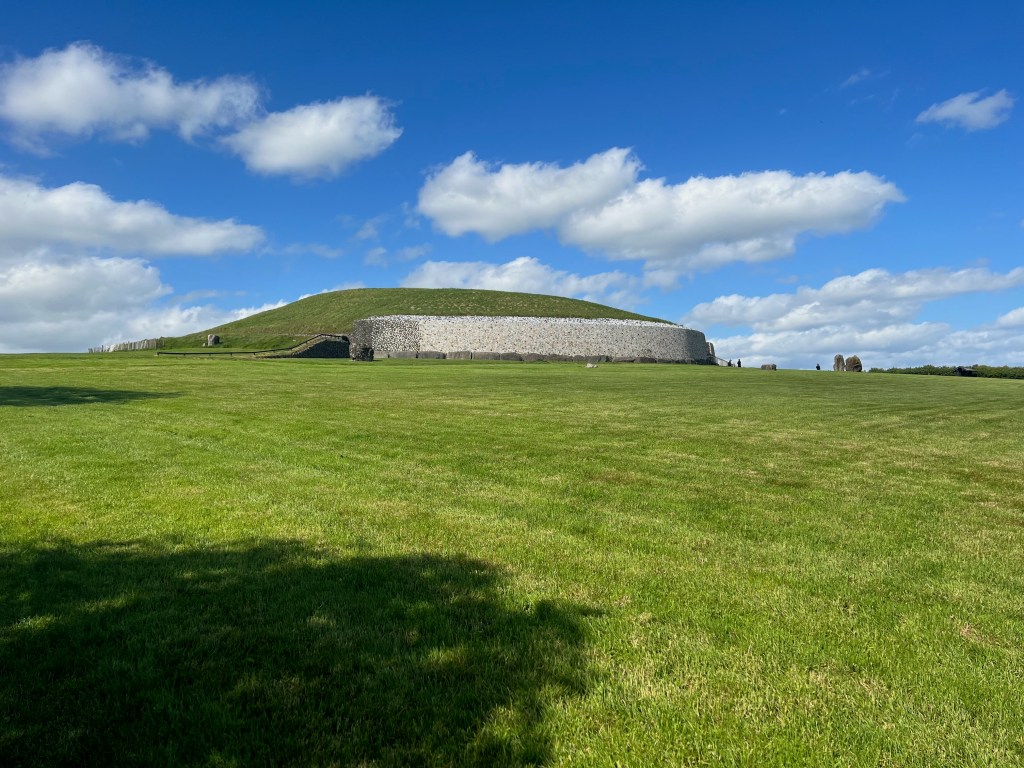
Newgrange is in fact magical. You pass through a beautifully designed visitor center, itself shaped like the spiral pattern common in Neolithic art (and in Cathy’s doodling, I might add), walk over a footbridge spanning the River Boyne, the breeze blowing, birds warbling, and then take a bus first to Knowth (pronounced “nowth) which dates back to 3200 BC, then to Newgrange. You learn how the builders spent 50 years transporting large rocks weighing several tons by boat from the Wicklow Mountains south of Dublin, over 70 km away,  and somehow (some think using slippery seaweed harvested 20 km away) pushed the giant stones up a steep hill to build the perimeter

We’re talking over 5000 years ago. That’s 800 years before the Great Pyramid and Stonehenge. Go back as much time before the sweet baby Jesus as after him. 

Imagine, just imagine, you’re a grad student in 1969 with dark framed glasses in an Oxford cloth buttoned down collar shirt, about our age, and you are the first to discover the opening through which sunlight entered the inner chamber on the morning of the Winter Solstice and you know, you just know, that you may work the rest of your life and never be part of a discovery like that again.

This is the view looking up from the inner chamber at Newgrange. (I stole this from Google; you’re not allowed to take photographs inside) That’s 200,000 tons of rock, carefully cantilevered so precisely that scientists can confirm that for over 5000 years the interior has been bone dry. Not one drop of Irish weather ever seeped in.

I’ve felt a tuning fork like tie to our primitive past only twice in my life. The first time was when I witnessed a total solar eclipse standing on a high school football field in eastern Oregon. The second time was yesterday, when standing in the inner chamber of Newgrange, holding Cathy’s hand, looking up at this sight above, our guide turned off the lights, turning the world so dark you couldn’t see your hand in front of your face, and then recreated what it is like on the Winter Solstice when the rising sun slowly extends light down the narrow corridor precisely positioned for that moment in the year.

It was eerie. 

We think of December 21 as the start of winter. The ancients knew it for what it was. The moment when daylight, and the warmth it brings, begins to grow longer.

Cathy and I decided Fred and Wilma, Barney and Betty, must have been optimists. They knew things will get better. The days will get longer. The sun will shine warmer.

Just wait.

“Are These Books Real?”

May 27, 2022

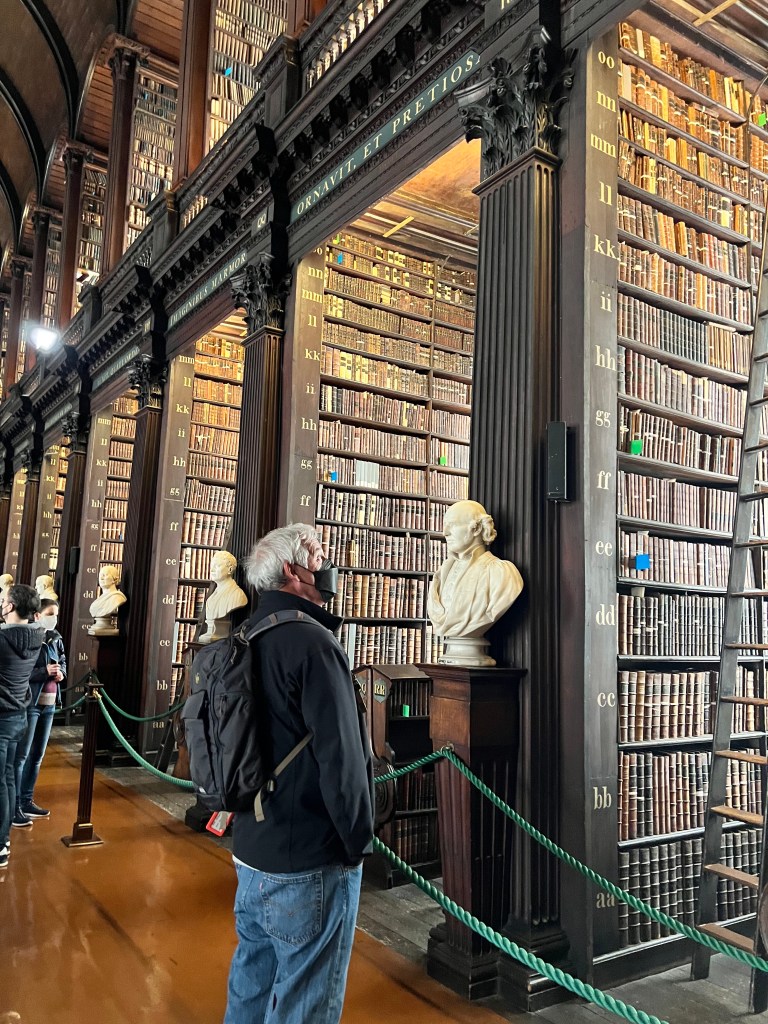
As Cathy and I walked from the dark room at Trinity College where the Book of Kells is kept hermetically sealed, we overheard an older gentleman ask, quite earnestly, “Are these books real?”

 I suppose you can’t blame him. We live in a world where the image of Tom Cruise . . . did that man ever meet a mirror he didn’t love? . . . is plastered on every double decker bus in Dublin promoting “Top Gun Maverick” a  “bigger than life” character I suspect a good part of the world is convinced is real, and if he isn’t, should be.  

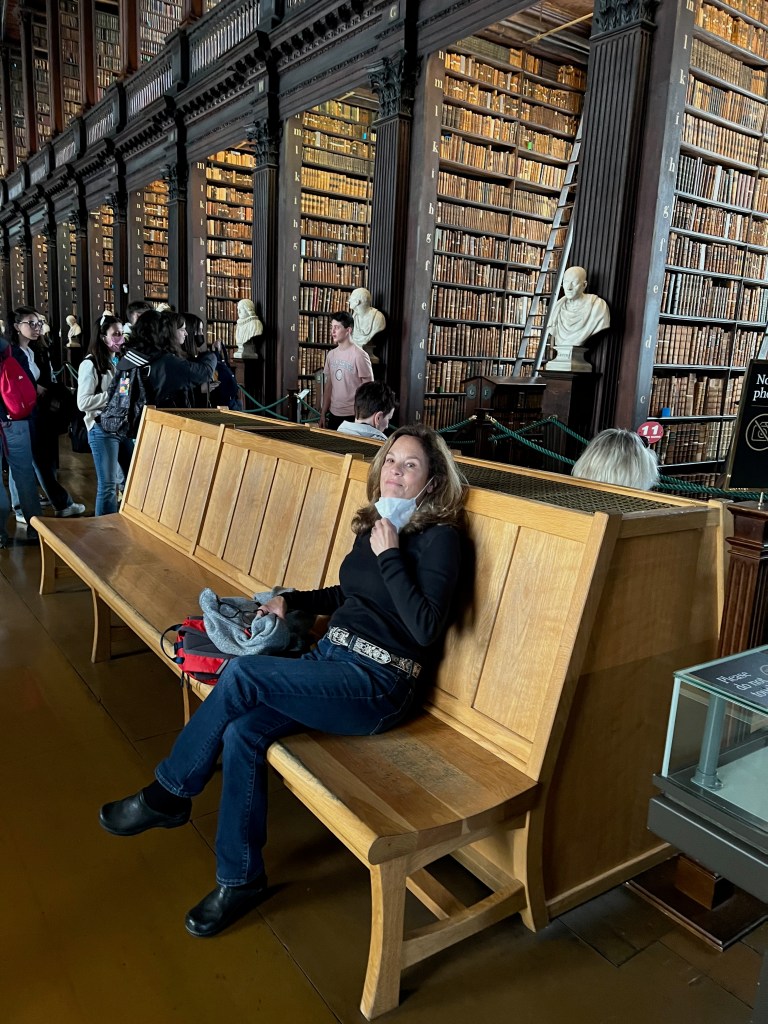
And you have to admit that the Long Room at Trinity College . . . a room that Cathy and I agree leaves in the dust any cathedral for jaw-dropping, breath-taking, awe-inspiring wonder. . .  looks as if it was taken from a scene in Harry Potter. 

After the gentleman asked if the books were real, I overheard his friend say, quite matter of factly, “I’ve never much cared for books.”

Boy, are you in the wrong place, fella. 

And not just books.

Have you ever considered how many ways we now have to learn?  I was thinking about that this morning in the glow of this laptop as Cathy sleeps in the predawn gloom of our hotel room. In the span of one day, Cathy and I 

  • sat atop an open-air double decker bus darting around Dublin as the driver explained over a PA system that an expression I had understood my whole life to be “on tenderhooks” is actually “on tenterhooks” and referred to wooden frames used to stretch poplin fabric to dry;
  • downloaded a nifty app on our smart phones to hold to your ear as we walked through the Book of Kells exhibit at Trinity College and learned that 9th century mischievous monks in some drafty monastery on the Isle of Iona would often hide editorial comments in their work such as “It’s so cold in here” and “When will this be over?” and could “erase” a mistake by simply scraping off more hide from the dried deer skin upon which they were drawing;
  • sat in an “immersive” room at the General Post Office and learned that the heroic, but sadly foolish leaders of the 1916 uprising were mystified that most Dubliners did not share their fervor and one bold woman, ticked off that the “rebellion” was disrupting her daily life, marched pass the British military barricade and gave Patrick Pearse a piece of her pissed off mind.
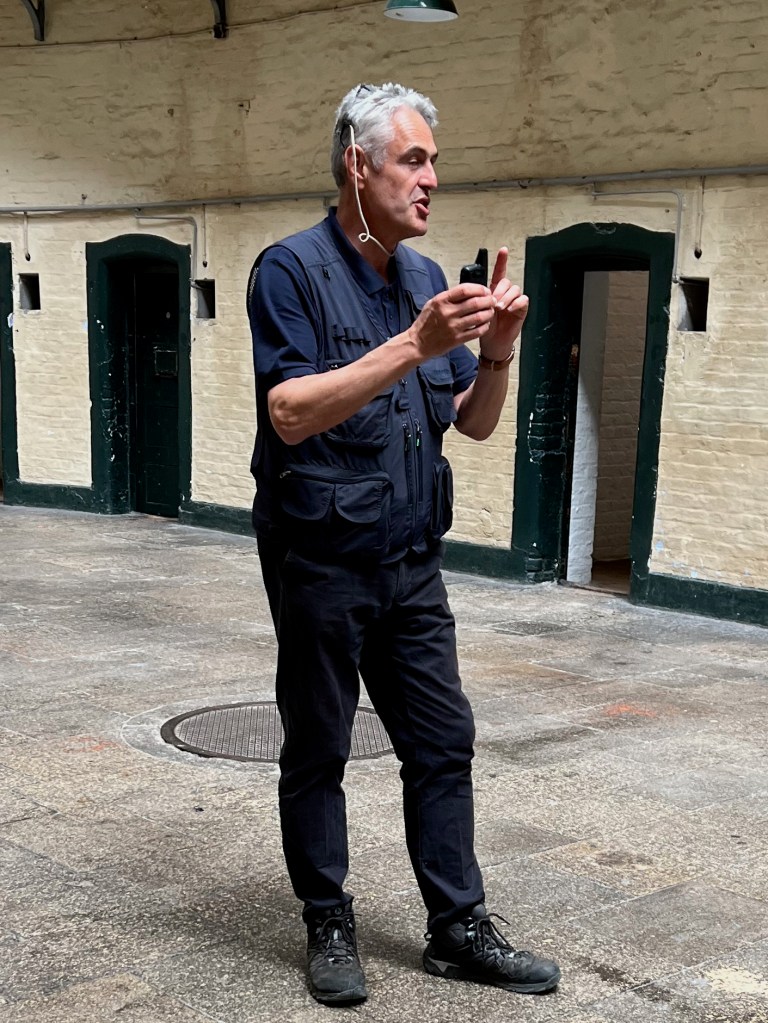
  • walked quietly through Kilmainham Gaol and learned, old school, from a docent who had a voice somewhere between Liam Neeson and Peter O’Toole, that the jail housed not only the te leaders of the Easter uprising, but children, some unaccompanied by parents, one as young as three year’s old, for the heinous crime of stealing food when the famine was so awful that many people, without a roof, and without food, hoped to get caught so that they might have both in prison.
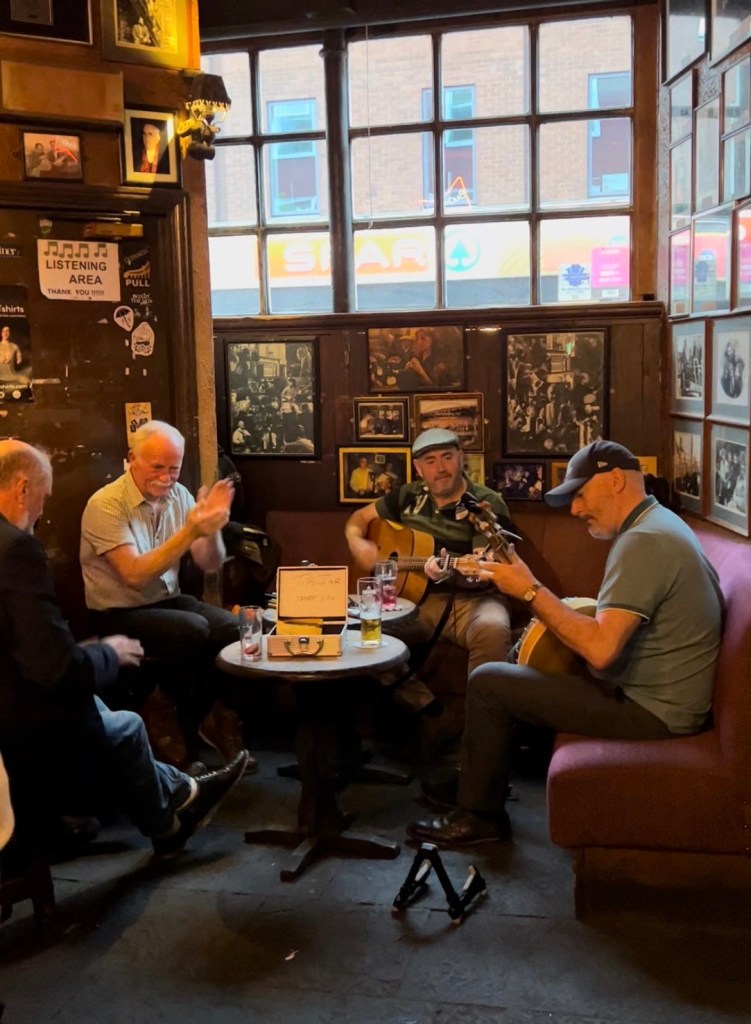
  • sat at the bar of O’Donoghues listening to three gents play “The Irish Rover” and a kind young man, seeing that I was sipping “the golden liquid” asked what whiskey I had chosen. When I told him that it was Bushmill’s Black, he allowed as how that was a fine choice, but then proceeded to educate Cathy and I on your finer whiskeys, how to smell them, what scents to pick up, never with ice, and then as a welcome to Ireland, and to the surprise of the bar tender,  bought us a shot of his favorite Midleton Very Rare, which costs 35 euros! When we reciprocated and bought his three friends each a pint and him his favorite Midleton Rare, he was embarrassed that we felt obliged, gave Cathy a hug, and me a “look-in-the-eye” handshake.

I don’t know. Seems this glorious morning as Cathy stirs and the sun creeps through the crack in the folds of the heavy drapes, that there is just too much to learn and too little time, no matter the means, old or new, with which we are afforded to make the attempt.
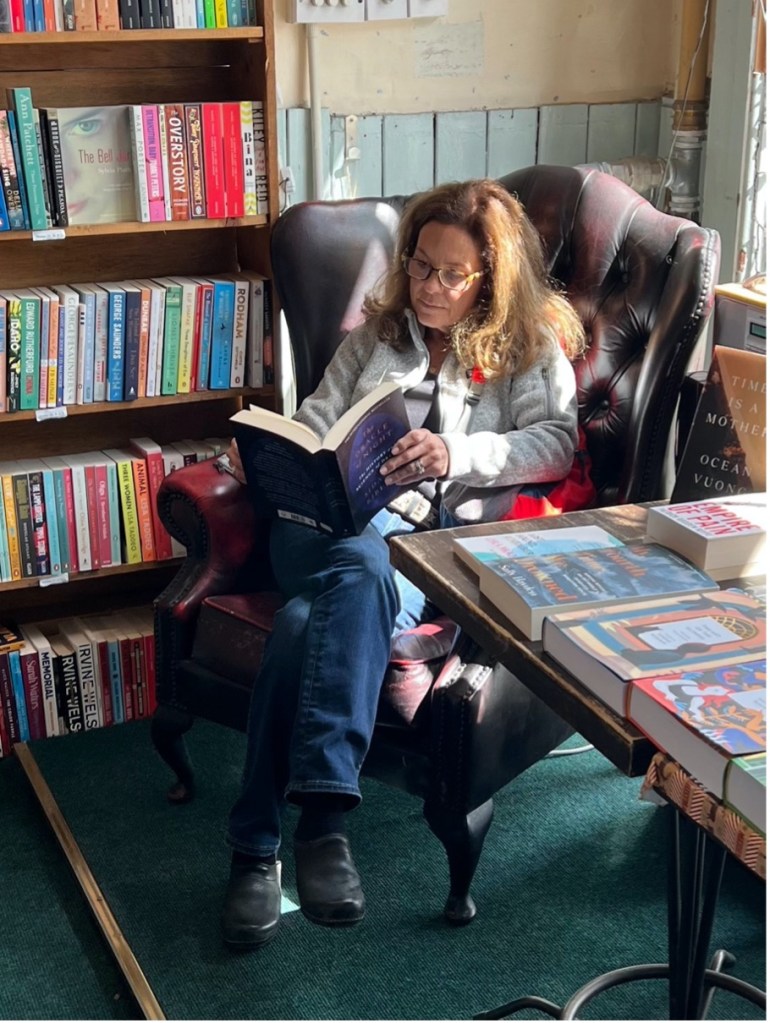
We’re off to Newgrange and the Mourne Mountains today, but my favorite image of Dublin was one I caught in The Winding Staircase bookstore north of the Liffey.  

The light was just right. She’s always learning.

.

Christy Dunne

May 27, 2022

He is a north sider. 

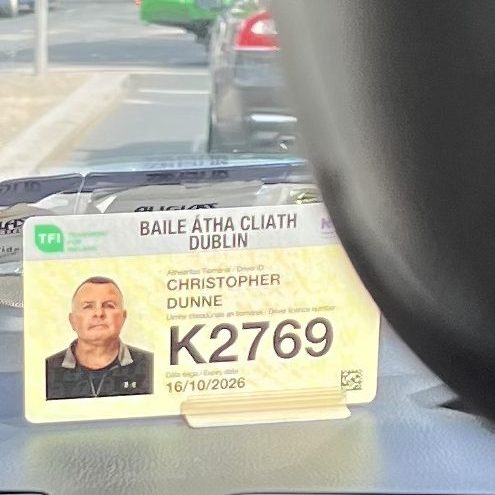
Christopher “Christy” Dunne was born and raised and will one day die on the north side of the River Liffey. It’s the working-class side of Dublin and Christy takes pride in that.

He is a short man with a neck as wide as his head, probably somewhere north of 50, and his graying hair cropped close. He wears black tennis shoes, black shorts, and a red North Face tee shirt that fits a wee bit too snug about a middle age paunch. He will tell you that he’s put on a few pounds since his welter weight days in the 80s when he was the All Ireland champion with 57 K O’s .

He drives through Dublin, effortlessly darting between lanes, rolling down his window to give Sharon a tease because her car is sporting a handicapped license plate when he knows she just came from climbing the hills of Athens, or another cabby who is already regretting, before he has even left Dublin, that he agreed to drive a group of dim-witted Americans to sightsee in Belfast. Christy turned down the high fare jaunt because he had to get back to “train the kids” at the boxing gym.

His phone rings. His wife. He politely tells her he can’t talk now. He hangs up and explains what he sees as the beauty of owning his own taxi. If a customer pisses him off, he can call it a day and go home. And if his wife pisses him off, he can tell her there’s hurling match at “the Croker” and the fare rich fans streaming from the stands  is just too lucrative to pass up. When we tell Christy that we are getting married, he asks if we have been married before. We tell him yes. He pauses with a wry grin and tells us “ye’s look happy.” Then, chuckling, not really meaning it, he says “so there’s a chance I could be happy again too? , 
A cyclist darts in front of us as and Christy, who will tell you he’s not a fan of the sport, announces with a mischievous grin at us in his rear-view mirror, “Watch this. I’ll wash his face for him” We catch up and as Christy passes, he turns his wipers and window wash on, spraying the cyclist. 

When he’s not teaching his lads boxing, Christy is a fan of Irish football and hurling. Dublin is the perennial powerhouse in football, but Kilkenny, Cork and Tipperary own hurling. Christy takes pride in the fact that both leagues are amateur, not professional, and 83,000 Dubliners will fill The Croker to watch them.

We arrive at Hertz to pick up our car to head toward Newgrange and the Mourne Mountains.  Christy grabs our bags. I ask if I might take a picture. He pretends to plant a big kiss on Cathy, shakes my hand, tells me I’m a lucky man, and tells Sean, the parking lot attendant at Hertz, another Dubliner Christy knows, 

“Ye take good care of me friends, now lad.”

“Only Friends You Haven’t Yet Met”

May 25, 2022

It had been a long night. 

Our flight from Dulles to Dublin was delayed 4 hours and we were forced to deplane while they worked on a mechanical problem. (Note to travelers, at 11:00 on a Monday night, nothing . . . I mean nothing . . . is open in Dulles International). 

Our fellow passengers were strewn all over the thinly carpeted airport floor—some in ways not best seen and not soon enough forgotten—so Cath and I wandered through the terminal. We eventually landed in front of a Starbucks where the only thing being served was the Muzak the staff left playing some Dave Koz like smooth jazz. We grooved to the tunes of what we dubbed “The Starbuck’s Jazz Club” much to the amusement of the only other soul in sight, a janitor emptying trash nearby.

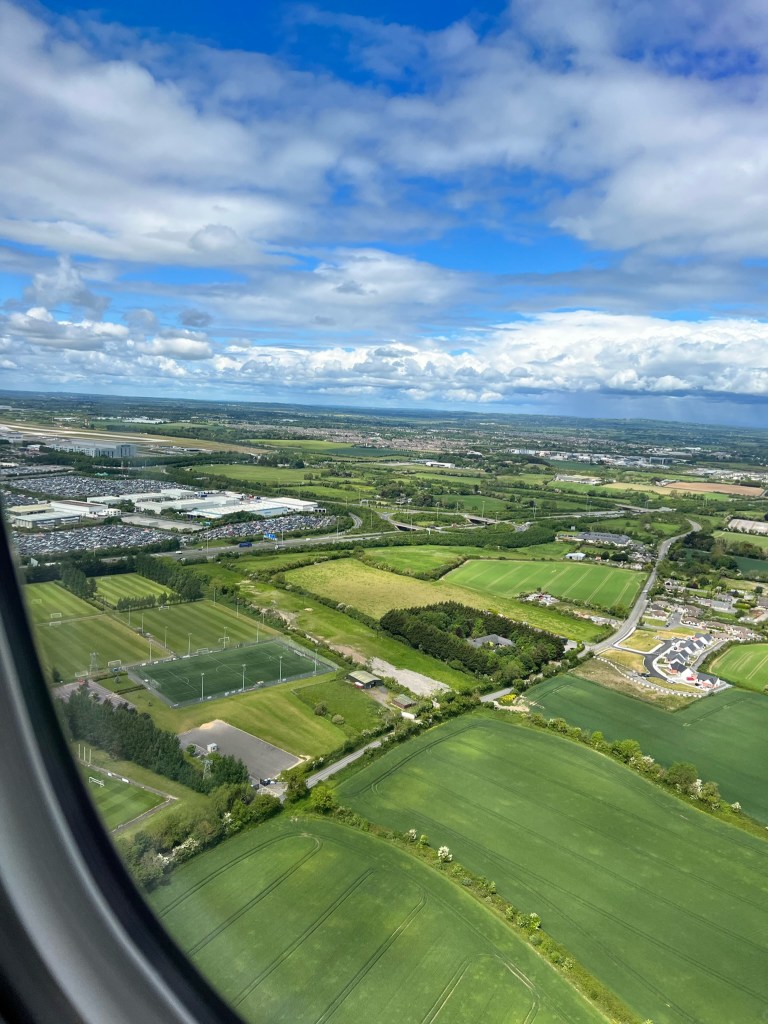
Convinced that the flight would likely be cancelled, we were pleasantly surprised to hear over the PA system that the “luck of the Irish” prevailed and the pilot would crank our 767 up to Wild Banshee speed to get us into Dublin as soon as the jet stream would permit. 

         On board, we settled into the sleeping pods which the good folks at United offered their Business Class patrons, I stayed awake to catch the delicious large ravioli in red sauce, followed by a delightful palate cleansing lemon sorbet, while my traveling partner and wife to be . . . AKA Ant Man . . . curled up, sound asleep, sporting a mask to keep out the Covid, a shade to keep out the light, and earphones to keep out the noise. 

Setting down in Dublin at about 1:30 p.m., I annoyed the grumpy Customs guy by apparently too cheerfully responding to his question “Purpose of Your Trip” with “. . . to get married.” He asked, “for how long”, referring to the length of our stay, and when I responded “forever” referring to the length of our marriage, he quickly decided the elderly American smart ass best be stamped on through.

Tickled that the portmanteau holding her wedding dress and my suit had not been lost, Cathy and I approached the Taxi cue where we were directed to the second taxi. The car was a spiffy Audi; the driver looked like a bald  6’4” cage fighter in a t shirt and orange sweat pants shorts and tall dark brown socks. Kinda a Jason Statham who had gone soft.

As I opened the back door to let Cathy in, he brusquely directed me to sit in the left front passenger seat with my daypack in my lap. As I did, fumbling for my seatbelt, he even more brusquely instructed me to mind that my pack not scratch the dashboard of his Audi, the likes of which–he quickly informed us—we were unlikely to see in all of Ireland.

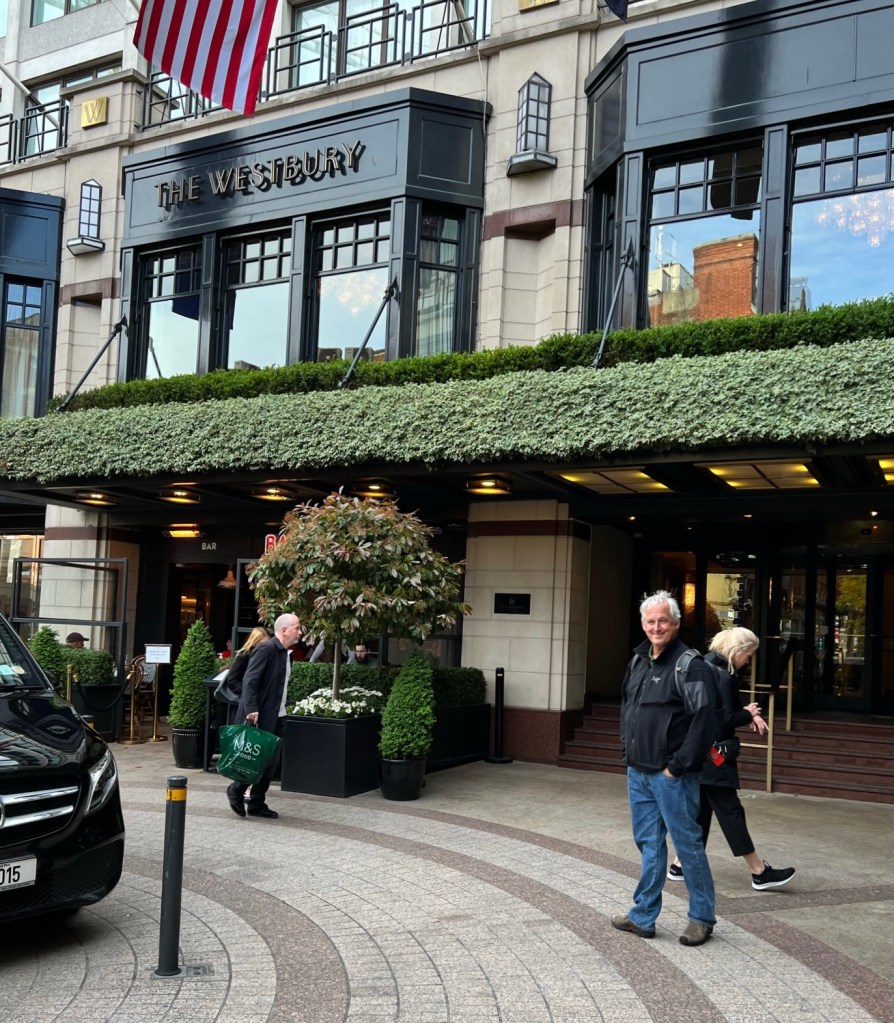
When he asked us what brought us to Ireland, we soon found ourselves telling him our life story and soon found him telling us his. He took one look at Cathy and informed me I was a lucky “fecker.” I agreed and we became over the course of the half hour ride to the Westbury Hotel best friends. On the ride,  we learned.

  • He has traveled throughout the States on a Harley, and remembered well Sonoma County; he thought Yosemite the most beautiful place in the world;
  • He has been feeling melancholy of late, the taxi business being devastated by Covid;
  • He has two adult sons; when I asked him “do they live nearby, he said, “too nearby; they live with me  and me wife; we can’t get rid of them.”
  • We agreed we hated the British after he explained that the stadium we drove by seats 80,000 for Irish football and hurling, and that the British in 1921 drove a tank onto the field and riddled the audience with machine gun fire (Cathy and I had just seen this watching the movie Michael Connelly and wondered if that hadn’t been Hollywood exaggeration).
  • He pointed out that the windows we saw in the upper floors of old Georgian homes had been cemented closed because, at the time, the British taxed Dubliners by the number of windows there were in their homes.
  • He suggested that when we arrive in Northern Ireland we best keep to ourselves that Cathy’s family heritage was Catholic and mine was Protestant;
  • He showed us the sights of Dublin, while talking on his mobile with the real estate agent while passing within inches of cyclists and busses in the tight city streets.

As we checked into the Westbury, Cathy and I agreed: that’s the thing about the Irish and why we love it so much here. It’s not just their gift for gab. It’s the way they treat you, a perfect stranger, as a long-lost friend. 

Every interaction . . . whether with the kind lady in the snack shop at Trinity who sold us our Hop On Hop Off bus tickets, or the driver of the Hop On Hop Off who came to an abrupt stop in the center lane to allow us to board after we hailed him from the curb, or the waiter at the restaurant who enthusiastically brought us the bottle of “Lite” tonic so that Cathy and I might verify the Vodka Tonic she was contemplating was Diabetic Safe . . . they all treat you as if no question is a bother, certainly not for you, a friend.

Yeats was right:

“there are no strangers here; only friends you haven’t yet met.”

When Next I Pass this Way


October 15, 2018

Dublin, Ireland


IMG_0396.jpg

It’s time to head home.

When I set out on this silly golf junket, I had plans to play Portrush and Lahinch,  explore County Armagh,  Sligo, Connemarra,  maybe sit on the cliffs of Inishmore in the Aran Islands overlooking the wild Atlantic.

But the Atlantic has grown more wild in recent days and I suspect that if I am not sitting in a driving rain, the view from the cliffs may be less blue than gray.  The thought of trying to find my way over narrow roads, straining to hear my Google Map directions over the sound of the  defrost  blasting and  wiper blades slapping, has grown less romantic. And then, there’s my golf game which, already bound tight, tends to constrict further when it’s confined beneath three layers of rain gear.

So, I’m heading home. This isn’t a sad decision; in fact, I’m quite proud of myself for choosing to be happy.

No, if this trip is about anything, it’s about new beginnings and the value of time. If you’re a working stiff like me, you only have so much free time in this life. It’s dumb to waste it playing alone in the rain.

When next I pass this way, I hope to share the road with a real voice, a familiar voice, not Google Maps, but someone who can help me find my way through  the roundabouts, and someone with whom I can sit on the cliffs of Inishmore and see nothing but blue skies for as far as the eye can see.

Of course.


Looking for Joyce . . . and a Place to Pee

October 14, 2018

Dublin, Ireland


IMG_0719.jpg

I decided this morning that I would indulge myself.

Next to playing golf, the one thing I enjoy in this world is lingering in a bookstore.  So with the aid of my trusty Google and Google Maps, I set out on a Leopold Bloom like quest to visit the best bookstores in Dublin.

They are listed right here on the “Lovin Dublin” website. You’ve got your Winding Stair just across the River Liffey, Dubray Books on Grafton, Hodges Figgis on Dawson Street, and Ulysses Rare Books. How fun is this going to be?

So excited was I at the prospect, I forgot the silent commandment observed by all sixty year old guys, “Thou shall not leave anywhere without first stopping at the bathroom.”

No matter. No time to waste.

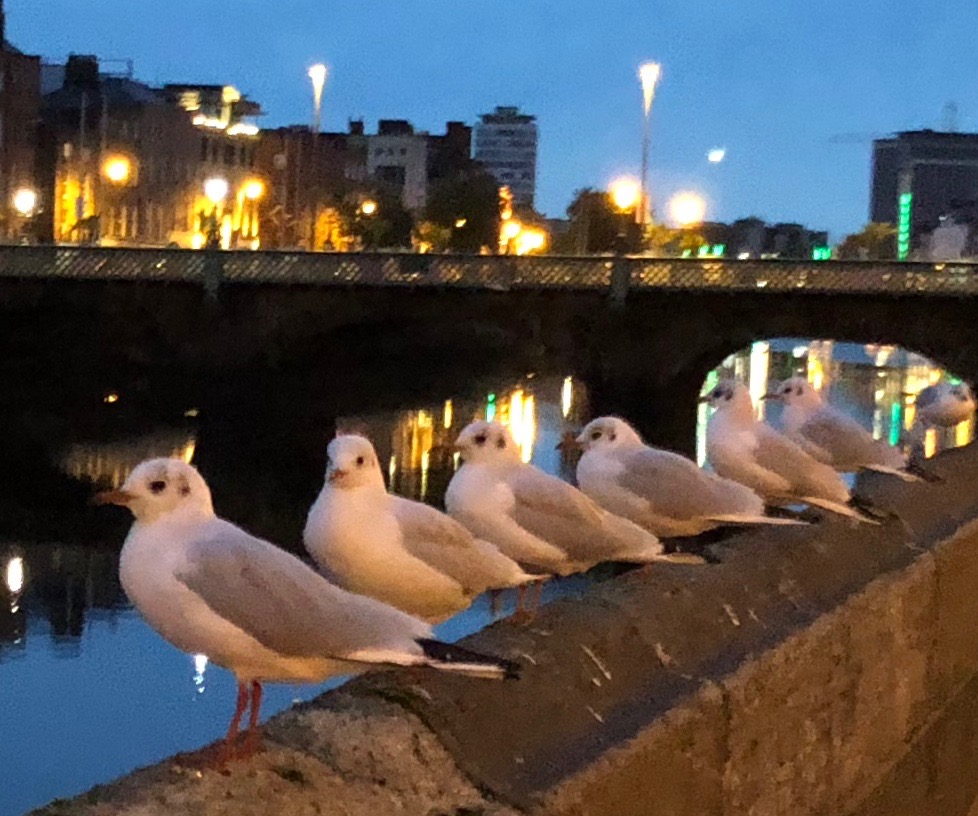
I set out  and quickly discovered in the predawn light that, this being Ireland, and it being Sunday, and no one up other than me and the gulls (the gulls and I?) I had several hours to kill. So I made my way down the River Liffey, crossed the Ha’Penny Bridge, and turned toward Trinity College, with my ultimate destination St. Stephen’s Green. I’ll catch the park in the dawn light. Good photo ops.

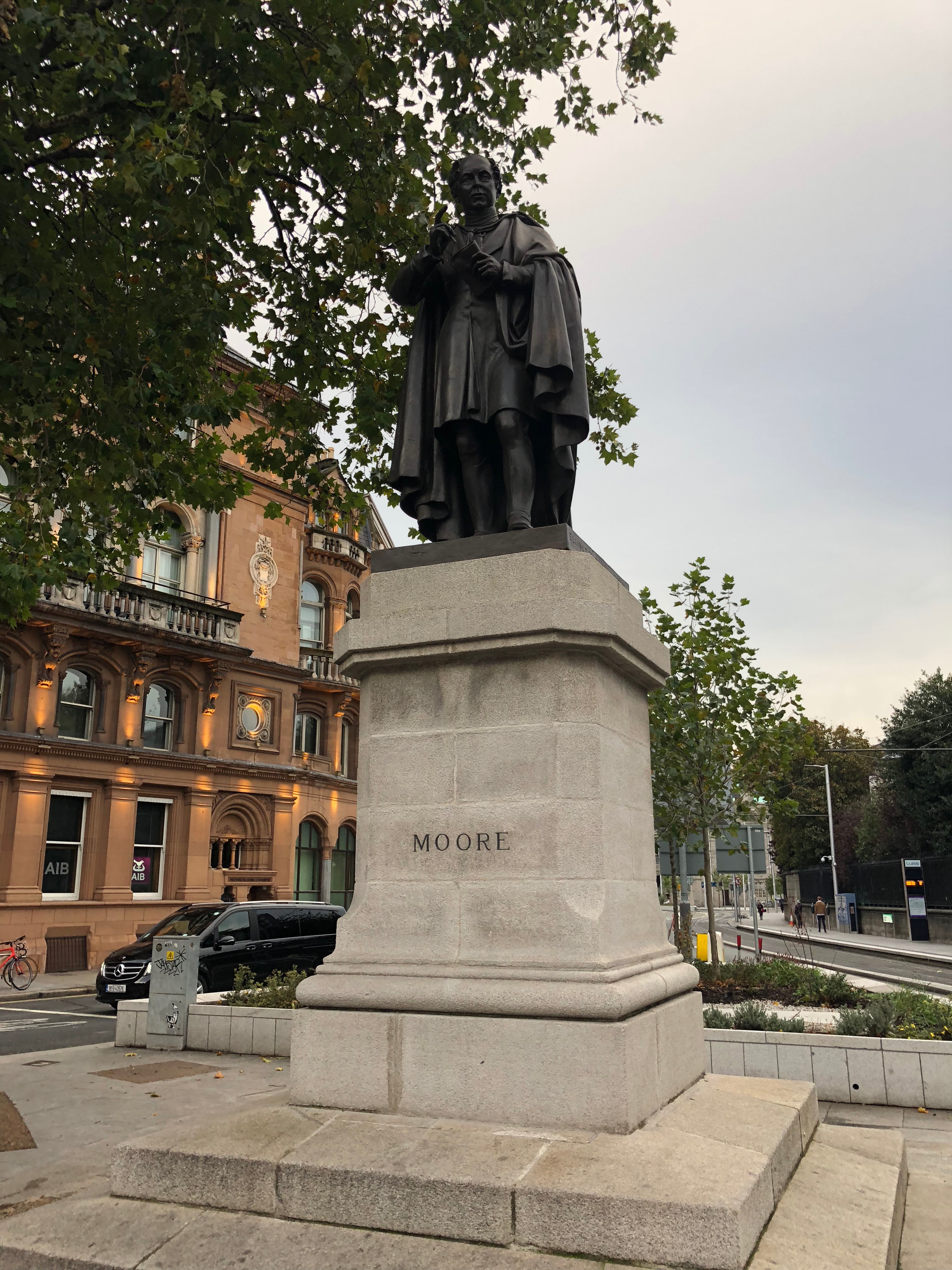
As I approached the Bank of Ireland facade, I looked up to see a statue of Thomas Moore. That’s when it all began.

IMG_0727.jpg

For starters, this isn’t  Sir Thomas More of  “A Man for All Seasons “; this is a nineteenth century Irish songwriter. I wasn’t quite sure who he was so I whipped out my phone and looked him up. Hmmm, interesting.

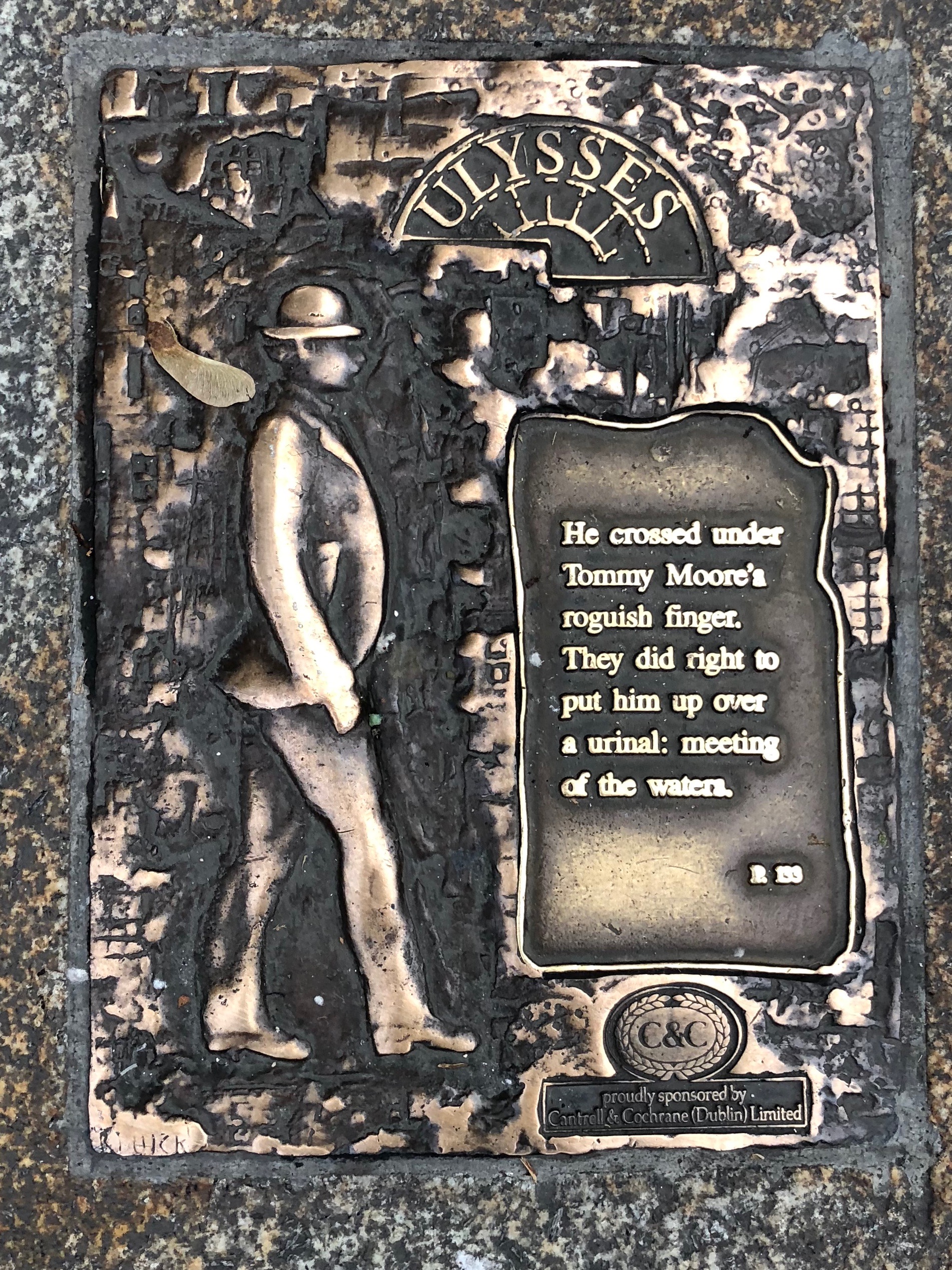
As I turned to make my way for the Green, I looked down and discovered this plaque in the pavement:

IMG_0726.jpg

Hmmmm, I thought, A typical Joycian allusion in Ullyses. What the hell; let’s look that up too. I’ve got lots of time.

I Googled that phrase and learned that Joyce was indicting Moore for selling out to the British and suggesting that a statue of the sell-out was fittingly placed above a public urinal.  You might have thought the reference to a urinal might have triggered a reminder, but ohhhhhh no.  While the subliminal seed was planted in the rising waters of my subconscious, my high and dry conscious self was focued on getting to the park in time to catch the dawn light.

So I walked up to St. Steven’s Green and was, just as I expected, spellbound by the morning light reflecting the fall colors in the duck pond. I was so intent on capturing the reflection with my iPhone, that I again forgot I needed to pee.

IMG_0734.jpg

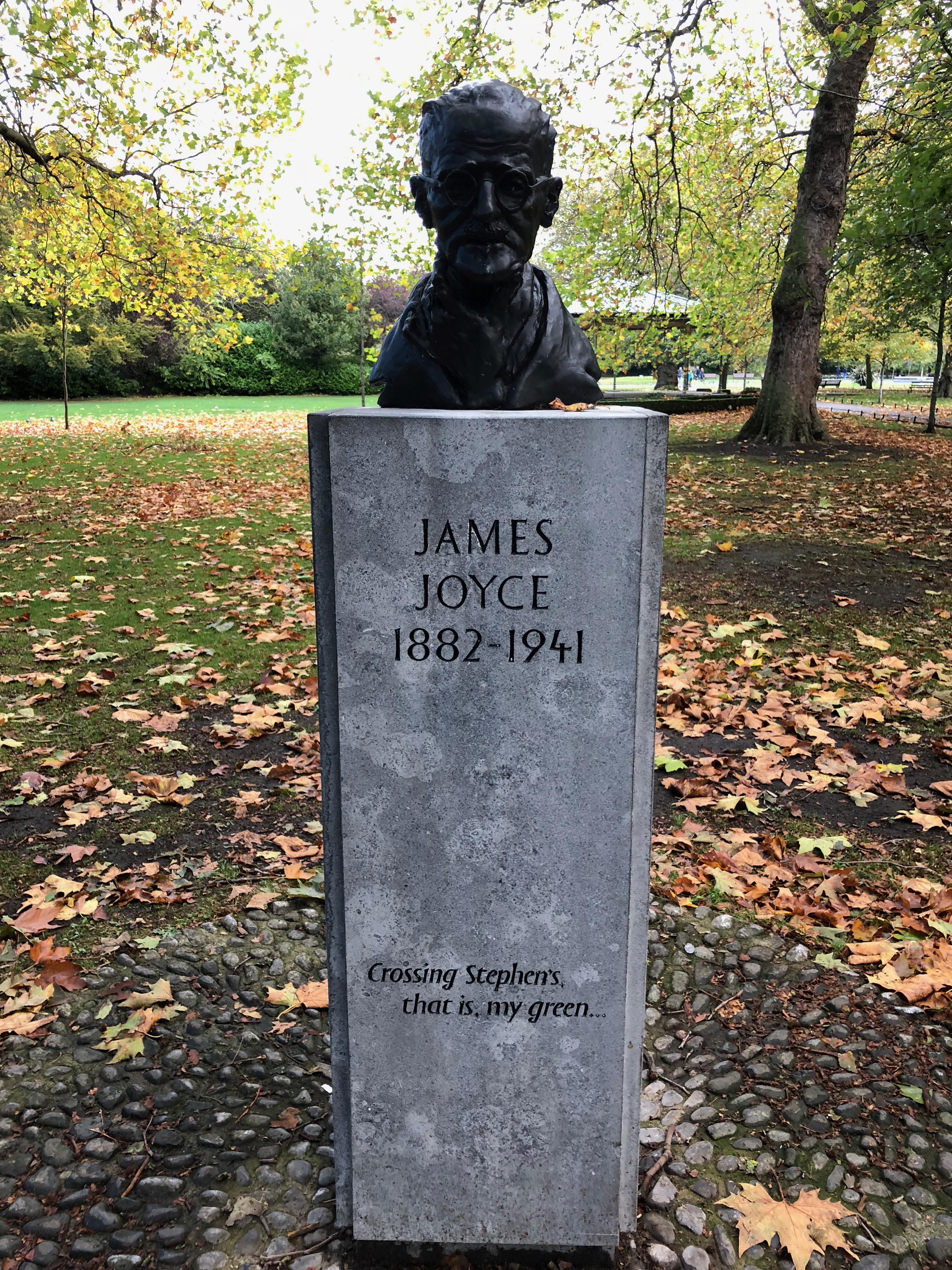
No sooner had I left the duck pond than I came across a map of the park and discovered that there was a bust of ol’ Joyce somewhere in the park at what was labeled”No 12″. The trouble was , the park sign didn’t have one of those “YOU ARE HERE” labels and, for the life of me, I couldn’t figure out where I was and where No. 12 was. You should know I am spatially challenged.

Apparently, while I’m hell bent on finding the bust of Joyce, unbeknownst to me, my bladder was just hell bent on busting, period. When I finally found him, I messed around making a fool of myself trying to get a picture of Jim with me over his shoulder or me with Jim over my shoulder. None of which came out looking anything other than just stupid, so I settled for this traditional mug shot perspective:

IMG_0740.jpg

My search now complete, my focus relaxed, I suddenly became conscious of what my subconcious had been desperately trying to tell me, “YOU NEED TO GO, as in NOW”

Now your Stephens Green is a beautiful park. It’s got your ponds, bandstands, groomed flower beds; it even has a man similar to the old woman in Mary Poppins who attracts pigeons to perch on his outstretched arms with birdseed. All of which I learned while skipping around the park desperately discovering that the one thing your Stephen’s Green doesn’t have is a public restroom.

Exit stage left.

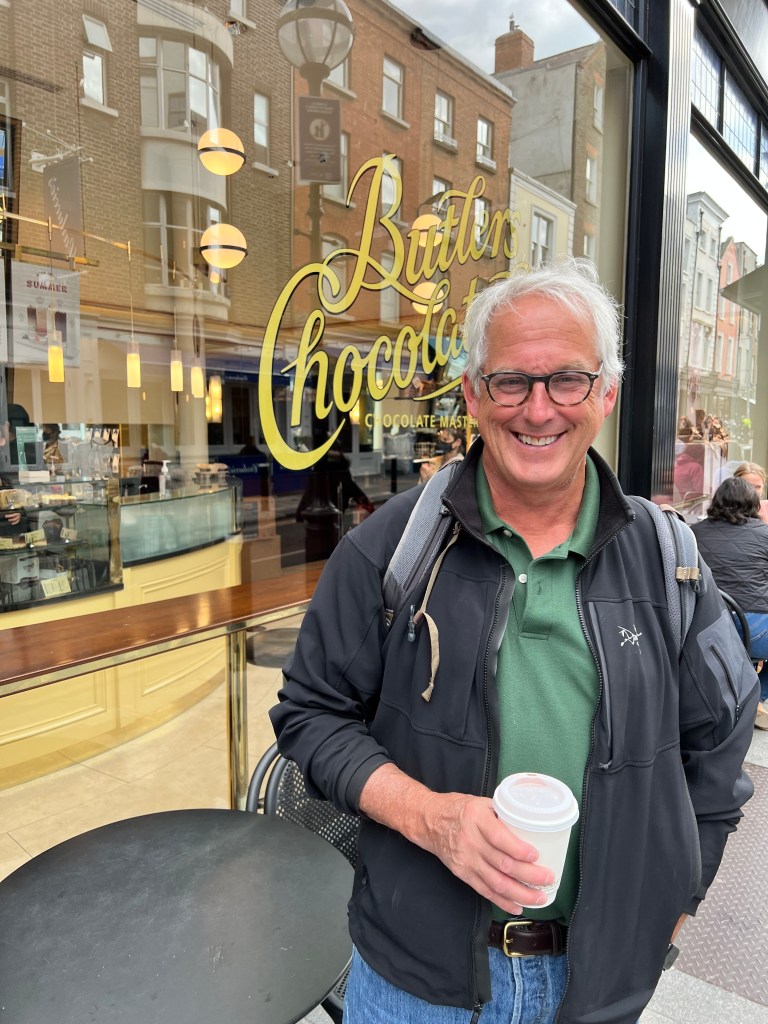
I scooted down Grafton Street, no doubt prompting comment from several passerbys (“that old guy has certainly got a spring in his step this morning, doesn’t he honey?”), a couple of times  hopped in place when forced to stop at a pedestrian traffic signal (“just running in place to stay loose”), and finally rushed into that great American salvation . . . a Starbucks.

A large tea, a croissant . . . and “oh, do you have a restroom?”


We’ve grown afraid to run around naked.

October 12, 2018

St. Andrews, Scotland

IMG_0700.jpg


I belong to a book club.

There. I said it. Okay?

In my golf league this is not something one admits.  The fellas in the golf league, while certainly readers themselves, find the idea of men getting together to “discuss” books a little too close to the kind of “sharing” they presume takes place at bridal or baby showers,  or god forbid . . .  women’s book clubs.  “It’s okay to read, Rob,  but do you have to talk about it?”

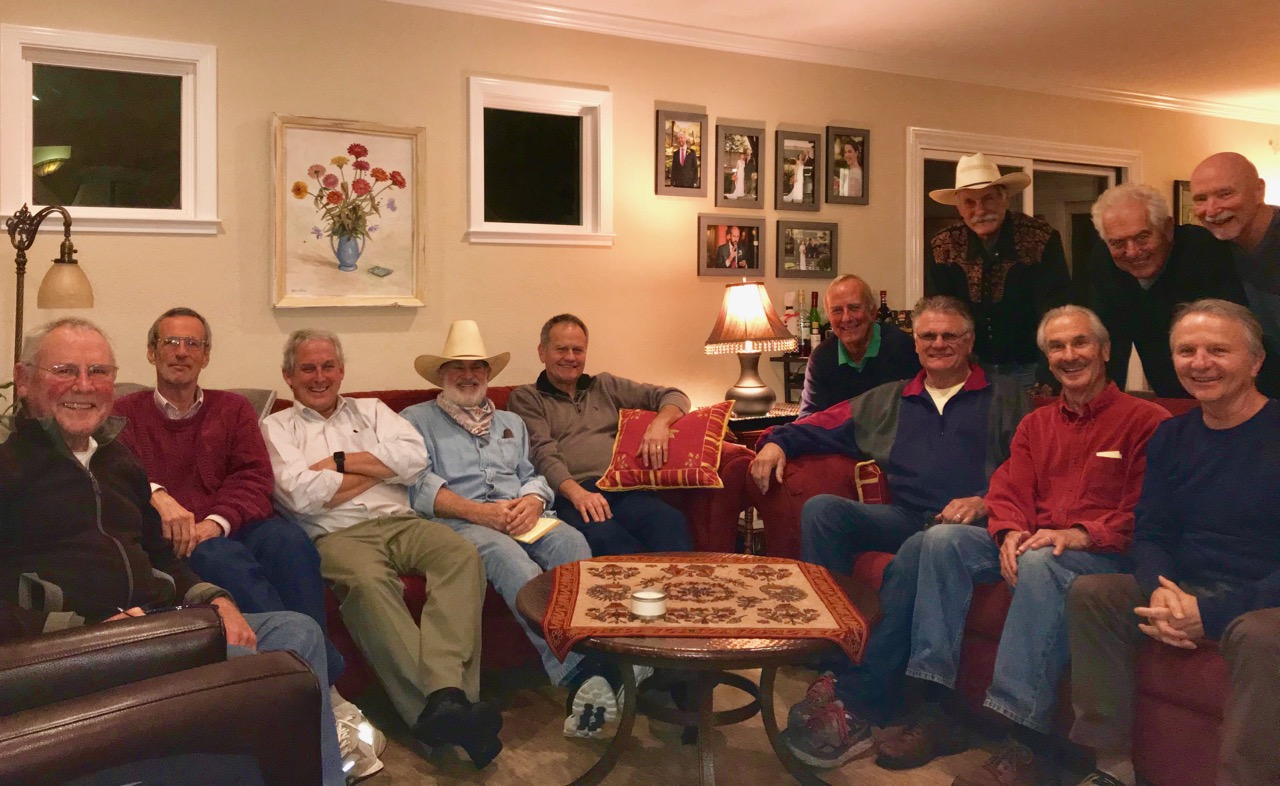
My book club is made up of 12 guys. These guys


IMG_1487.jpg

They are, with the exception of the outstretched guy in the white shirt,  very intelligent, very insightful, very well spoken, and very, very well read. And my good friends.

We “bookies”  read a book a month, but designate one book–what we deem to be a classic in literature–to read over the course of the year and discuss at our annual retreat. Two years ago it was Dostoyevski’s Crime and Punishment. Next year there is talk of tackling Don Quixote. (Yikes!)

This year we chose Joseph Heller’s “Catch-22”  Most of us had read this classic anti-war novel in college and each of us enjoyed it very much.

It spoke to us . . . in college.

Now? Not so much. The absurdity, the humor, the irreverance that so appealed to us, so resonated when we were young . . . fell flat. Milo Minderbinder just wasn’t funny anymore.

Why?

Same characters. Same story.  Why did something that struck a chord when we were twenty seem so out of tune to us in our sixties and seventies?

The book hadn’t changed. We had.

IMG_0691.jpg

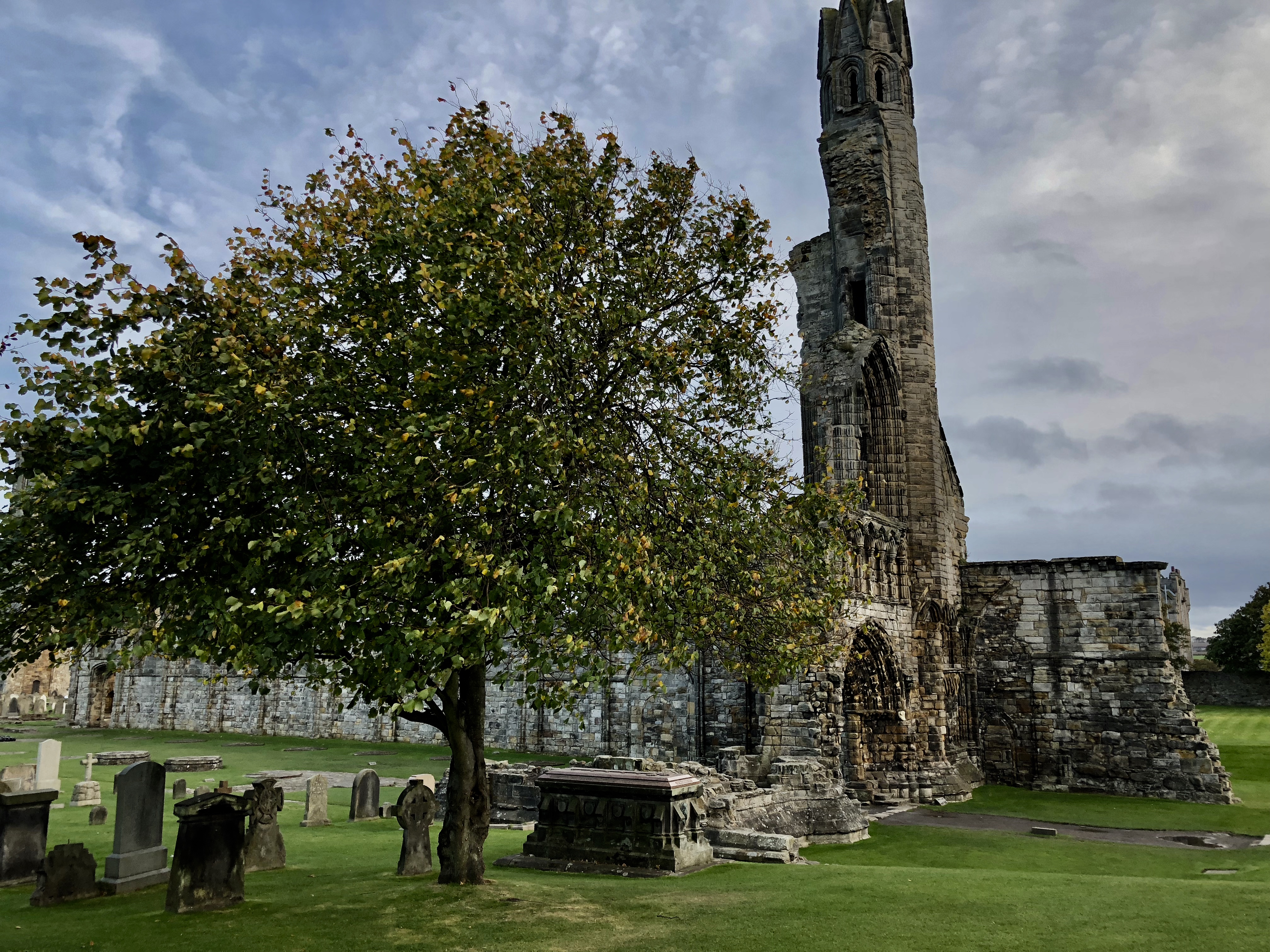
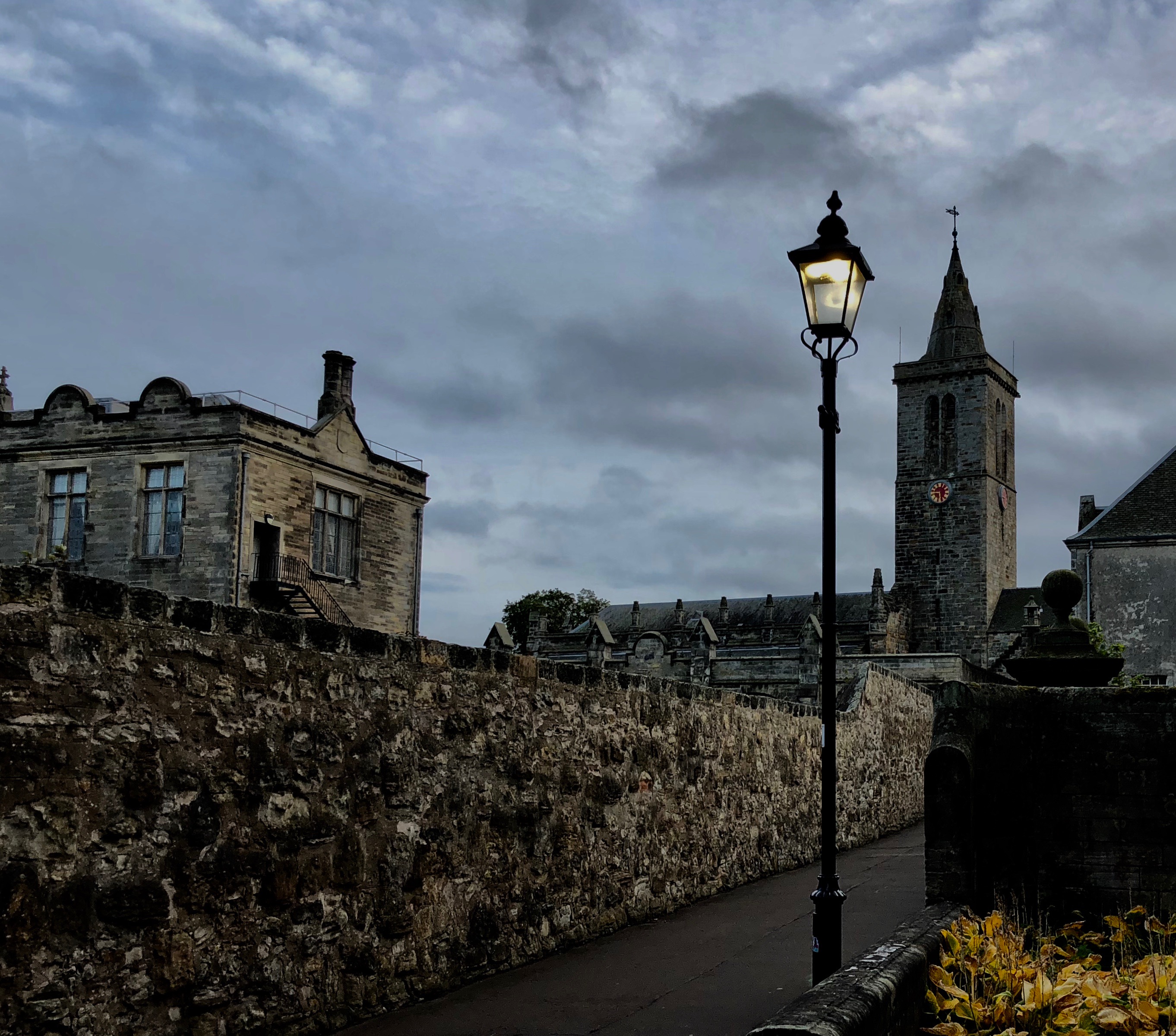
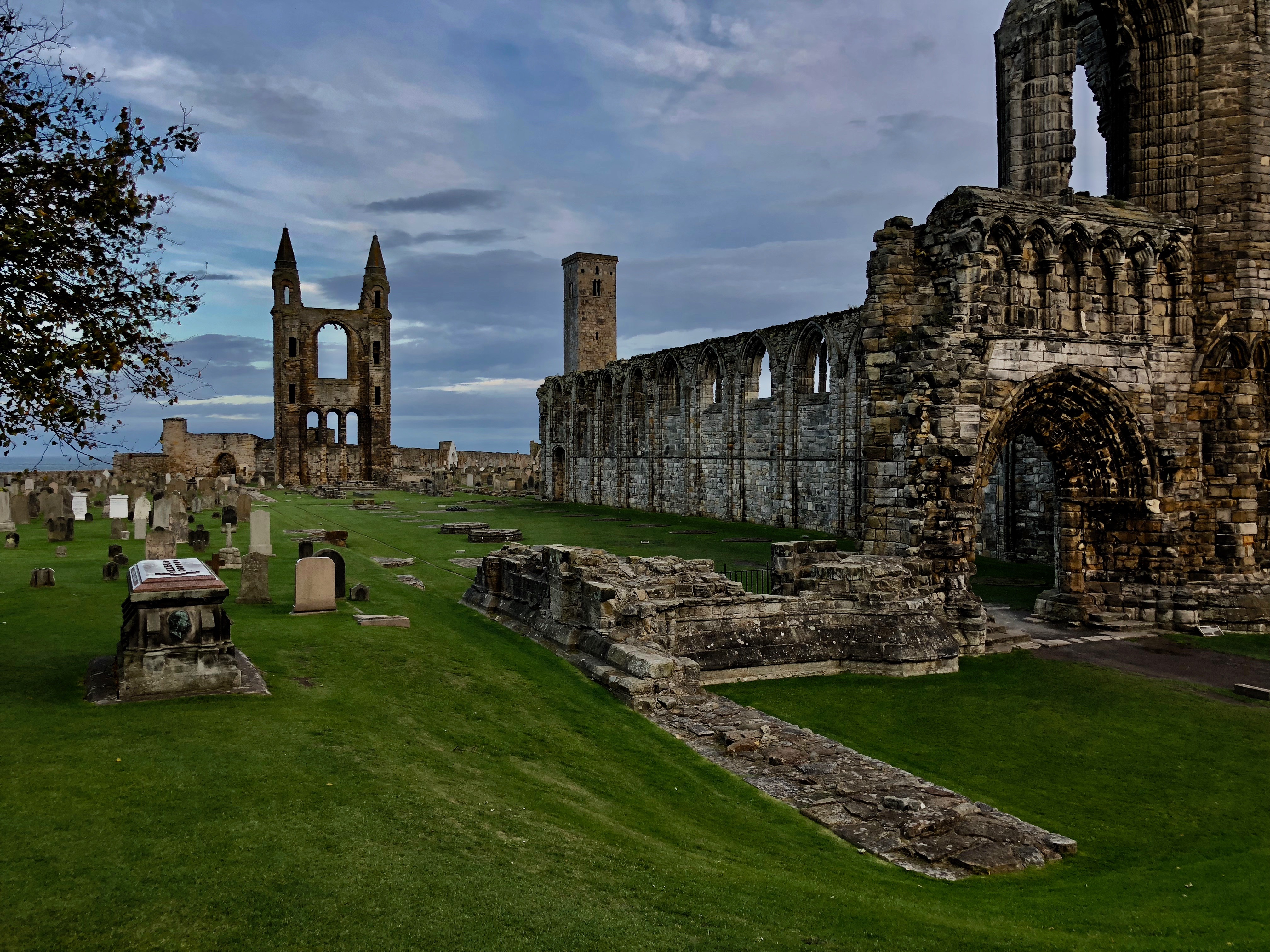
I walked through the campus of the University of St. Andrews tonight in the rain. It is a very prestigious university dating back to 1413 and ranked in Great Britain behind only Oxford and Cambridge. It has produced three Nobel prize winners, prime ministers and captains of industry. John Knox went here. Jean Paul Marat went here. If they don’t impress you, how about Prince William and Kate Middleton. Still not impressed: how about John Cleese.

This place is more steeped in tradition than my English Breakfast tea. Hell, they even have names for class levels. Oh no, freshmen, sophomores, juniors and seniors just won’t do.  At St. Andrews, your first year guys are known as ‘Bejants’ and first year gals are known as ‘Bejantines.’ Second years, “Semis”. Third years, “Tertians” And final years are Magistrands.

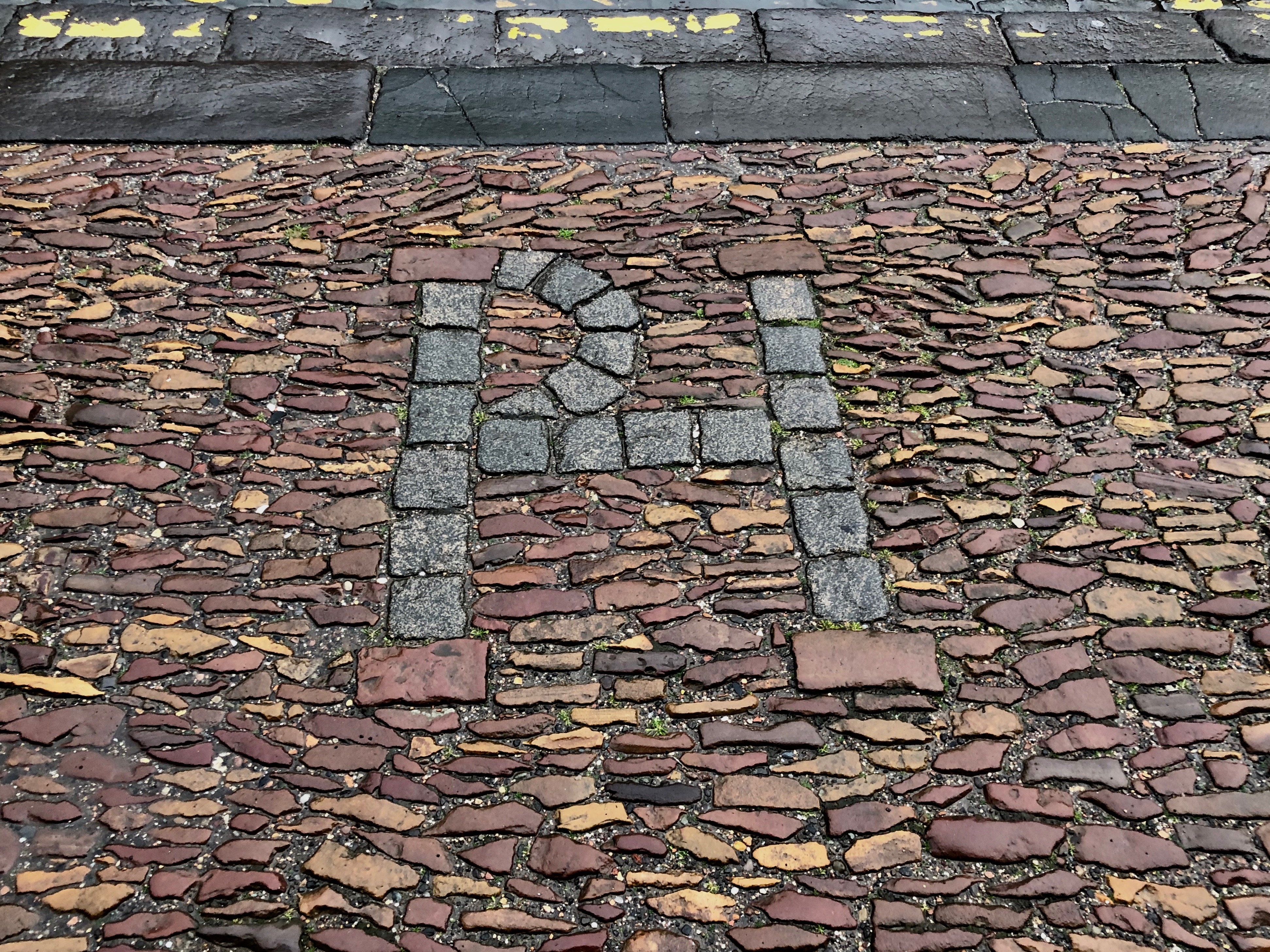
Old? I’ll give you old. There are initials in the cobblestones in front of the gate to San Salvatore’s Quadrangle spelling “PH” to show where, in 1528, a 24 year old student Patrick Hamilton, was burned at the stake for espousing Protestant beliefs.

IMG_0683.jpg

Tradition has it that if a student steps on the ol’ PH, they are cursed to fail. The curse can only be lifted if they run around the campus eight times naked.  I stood near the initials and watched. I didn’t see a whole lot of hopping over ol’ PH.

That . . . at last . . . is my point.

These cobblestones stay fixed. This place, this town, this campus stay fixed. Generations of bejants will hop . . or more likely . . .because they are young and bold . . . walk right over silly curses.

It’s time. It’s time. It’s time that changes where we walk.

As my bookie friends and I have oft discussed, how we react to a novel very much depends on the moment in time in which we read it.  Experience has intervened. Changed our perspective. We have grown world weary. We’ve grown afraid to run around naked.

St. Andrews is a college town, like any other college town on a Friday night. As I sat in a coffee shop enjoying my tea,  the  young man at a table to my right, desperately tried to impress the young woman across from him with his soaring erudition. You could tell from his confident manner that he was convinced it was working. You could tell from her bemused expression that it wasn’t.

I wanted to lean over, freeze frame the conversation,  and tell him, “Whoa, whoa, whoa . . . stop with the discourse on Hobbes; trust me, I’ve been here before; I’ve sat in that same chair; I was a bejant once..  “Just be yourself; she’ll like you.”

But then I thought . . . no.

Experience shouldn’t intervene.  That so called wisdom that may come with age is overrated. Knock yourself out kid. Swing for the fences. You may go down in flames like ol’ PH; you may be cursed by this misstep, but what’s the worst that will happen?

You might have to run around naked.


But that was a moment ago . . .

St. Andrews, Scotland

October 9, 2018


IMG_0349.jpg


Life is change.

A moment ago, the clouds were coming in. It was dark. The rain was steady.  The wind was in my face no matter which way I turned. My game seemed a slow gray slog, a steady drizzle of poor golf  with occasional flashes of brilliant mediocrity.

But that was a moment ago.

After 34 holes–18 on the New Course in the morning, and 16 on the Old Course in the late afternoon–I came to the 17th tee on the infamous Road Hole at St. Andrews, generally regarded as the most difficult 4 par in the world.

As you know, if you’re a student of the game, your target line from the tee is over the Old Course Hotel. Specifically, you aim over  “O” in “Old Course Hotel” painted on the side of the building.

Which “O” is your choice.

My drive was a weak ass fade, but I cleared the hotel and avoided (just barely) the glass conservatory on the far side. I chunked a 3-wood left of the fairway and had a dicey wedge from the long stuff over the infamous greenside bunker, escape from which requires Pappillon-like skills, which given my recent foray in Hell’s Bunker earlier, was a daunting . . . nah, let’s say. . . . depressing . . .prospect.

I was out of gas.

To make matters worse, a crowd of tourists had gathered on the “Road” behind the green to watch my approach. Oh great . . . I could use some more embarrassment. Already my playing partners, Stephan, a young investment banker from Milan, and a very pleasant, but very slow playing married couple from Mumbai, had endured watching me flail around.

But that was a moment ago.

My wedge didn’t flail. It flew. And my ball came to a rest on the green 30 feet from the cup. I had a putt for par.

Mind you, I hadn’t made a putt all day. And now the crowd behind the green had grown to an epic size. Must have been  . . . oh, I don’t know . . . maybe . . . I’d say . . . five or six people.

I lined it up. Took it back and  . . . thwack.

Had the cup not got in the way, the putt would have sailed off the green and likely ended up in the Swilcan Burn beyond the 18th tee. But the cup did get in the way,. My ball struck the far edge, bounced a good six inches straight up, and came straight down . . . for my par.

My gallery, apparently not familiar with the game, and assuming that ramming speed was required, erupted in applause. Stephan’s caddy Doug, a bear of a reassuring man, who previously told me ( in an effort to make me feel better) that Robert Dinero, for whom he looped earlier this year, had a swing  much worse than mine (with “more moving parts than a toilet chain.”), gave me a hearty pat on the back.

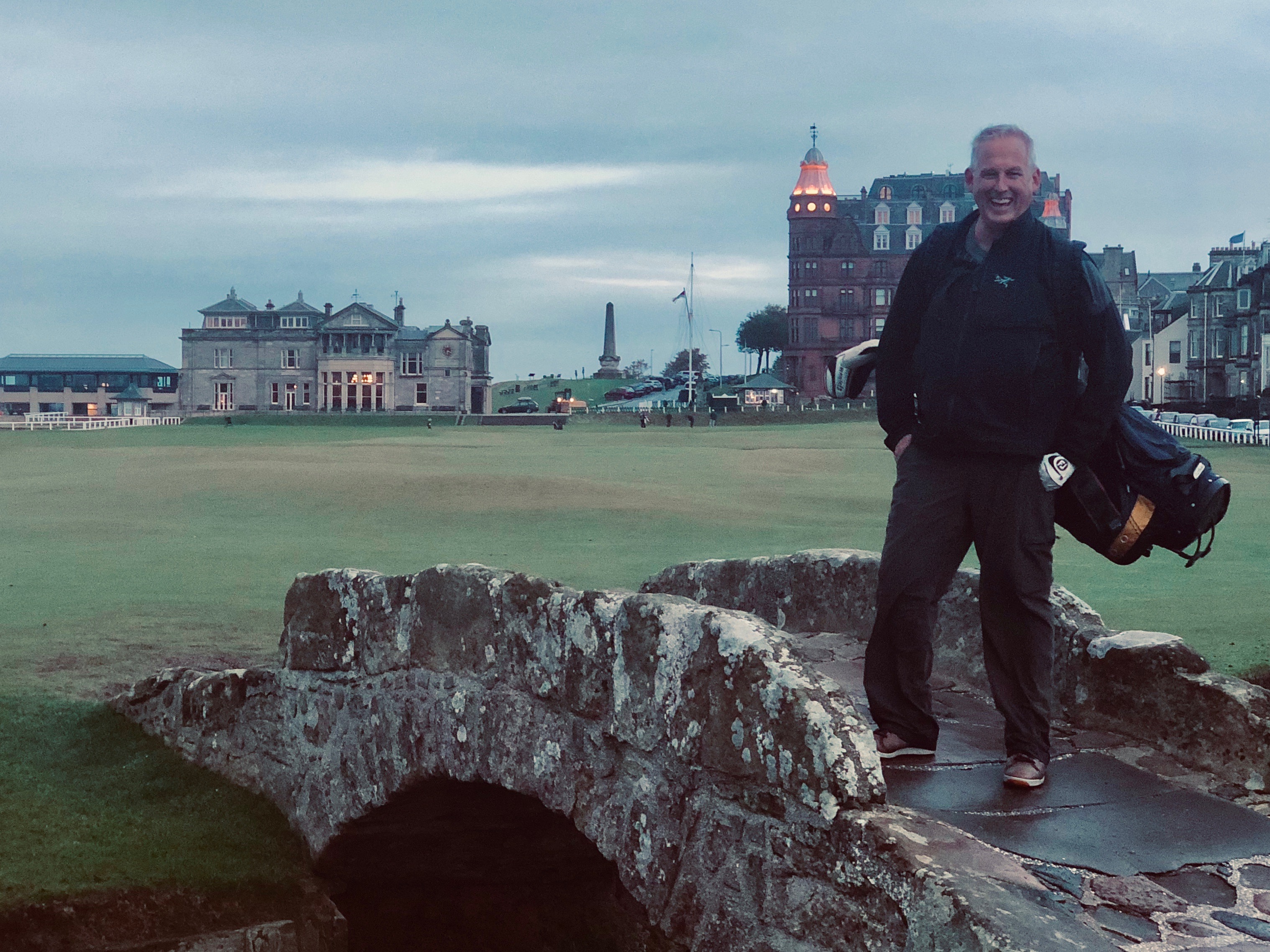
And so I found myself crossing the famous Swilcan Bridge with a smile as wide as the 18th fairway.


IMG_0379.jpg

Life is change. Sometimes, that change happens in a moment, for no apparent reason. Yes, shit happens. But, so do good things.

I’m a very fortunate man.